Image Description: Evelyn Ulysse Alcantara, a dark-skinned woman in a red PPT shirt, smiles in front of a collaged picture of Pittsburgh
I’m a mother and member of the Latino community fighting with PPT for a transit system that truly serves everyone. Will you join me by becoming a dues-paying member?
My name is Evelyn Ulysse Alcantara. I use public transportation daily for going to work, the doctor, leisure activities, meetings, bringing my son to school—everything.
I’m Latina and my English isn’t perfect, so when I first moved to Pittsburgh I struggled to use public transportation because there was so little information available in Spanish. This is why I volunteered to help be an ambassador for PPT’s Transit Tours. It was so frustrating and isolating to try and learn how to use the system by myself. I knew that if I could do something to support my community’s learning, I had to do it!
Being a PPT member hasn’t just improved my own transit needs. It opened the door to help me make a difference.
When there were cuts to transit in Beechview, there were times the bus or T didn’t come—and I didn’t know why because the changes were only communicated in English. But today, if you go to Steel Plaza or Wood Street Station, you’ll hear announcements in Spanish! And there are step by step instructions in Spanish on PRT’s website. This is because PPT and Casa San Jose came together to uplift my community’s voice, so that PRT could understand the true impact this was having on us.
This is PPT’s real power: they truly listen to the people.
When I first found out about PPT, they were asking for testimonies about the role transit has in people’s lives, to show how important a half-fare program would be. I knew I had to give my testimony, because we needed to take action to improve access. Back then it was just an idea, but today it’s a reality that brings transit service to the people!
I love PPT because I know firsthand what we can accomplish together.
In 2026 alone, we have:
We brought 120 members to Harrisburg to shed light on the $80 million dollar transit budget gap, and emphasise the importance of paratransit and shared ride services to our representatives.
We trained 13 community organizing fellows across the Hilltop neighborhood of PGH, and the Lancaster and Lehigh Valley regions of PA.
Shared skills and built power with 170 people from across the country at our 2026 Spring Training.
That’s why I wanted to ask: will you support PPT’s urgent work by becoming a dues-paying member today?
You can join for just $2.75—the current cost of a PRT bus fare! That money goes directly towards advocacy for a transit budget that moves ALL Pennsylvanians. Everyone deserves access to public transportation. Will you help us make that dream a reality?
Donate now to join Evelyn as a member—and build transit for the people!
PRT Must Set & Track Goals on Ridership, Service Reliability, Rider/Worker Satisfaction and Funding
A bus network redesign is a tool for massive change—whether good or bad. With the Bus Line Refresh, Pittsburgh Regional Transit (PRT) has the opportunity to make positive changes that our system needs. PRT has shown a commitment to rider needs by updating its Bus Line Refresh Draft 2.0 to include valuable new neighborhood connectors, expanding service frequencies on popular routes, and more. But in order to make the system work for its riders, PRT needs to commit to improving ridership, reliability, funding, and rider/worker satisfaction—regardless of what shape the Refresh ends up taking.
A strong transit system is one in which ridership is robust, buses and trolleys show up on time, and both riders and workers feel positive about their experience with the service. A strong transit system is also one in which there is stable funding to maintain and expand the service.
Ridership, Reliability, and Satisfaction Metrics Should Come First
At May’s Pittsburgh Regional Transit (PRT) Board of Director’s committee meetings, we were pleased to see some progress in our organizing for more transit system accountability, with PRT staff reporting to their Board on ridership and reliability trends by month. That’s a start: with more attention paid to these metrics, we hope to see clearer plans for how PRT is going to improve them. We have seen 40% of our total transit service cut over the last 20 years, and PRT service reliability is poor- as a result, transit ridership levels are now at a devastating low. That is why it is critical that PRT identifies goals and a plan for strengthening our system, and makes it clear how the Bus Line Refresh will help meet those goals.
The Bus Line Refresh needs to be part of a coherent broader PRT strategy around transit restoration, growth and improvement-—not just managing or accelerating decline—and the public must be able to evaluate the success of the plan implementation against those metrics. A Bus Line Refresh that clearly lays out its purpose in strengthening our transit system to the benefit of riders can then be used as a tool to organize for stable and expanded state transit funding.
1 . PRT should establish specific goals for growing ridership, improving reliability, improving rider/worker satisfaction, and supporting advocacy for expanded state funding.
Whatever the Refresh looks like, our system cannot succeed without dedicated attention and clear progress towards these vital goals.
2 . PRT must create transparency and accountability towards these goals by collecting data related to the impact of the Bus Line Refresh—before, during, and after implementation.
PRT should report monthly on these critical metrics to the PRT website and Board of Directors, as well as the Western PA Regional Data Center. Data to report include
Average ridership by route
On-time performance by route
Crowding by route
Number and type of customer complaints and their resolutions (in particular, as a way of daylighting ongoing communications, scheduling, disability and safety-related issues).
In addition, PRT should run parallel transit rider and transit worker satisfaction surveys, before, during, and after the implementation of the Bus Line Refresh. This will provide critical insights on whether the Refresh has improved or worsened transit outcomes for its primary stakeholders- its users and its workforce.
Some key questions to ask riders in these surveys are:
Overall approval of transit
Ease of use
Perception of reliability
Satisfaction with amenities at stops, stations or on vehicles
Satisfaction with the safety, accessibility and proximity of the bus stops to trip origins and destinations
First-last mile accessibility
Satisfaction with value for the fare paid
Total commute time
Do you have more or fewer transfers under the Bus Line Refresh than before?
How long is the wait time for your transfer(s)?
Do you feel like your trip is very fast, ok, or too long?
Are you paying more, less, or the same for transit?
Is your bus easier or harder to identify with the new naming system?
Demographic and geographic data, to assess Refresh impacts based on those characteristics
3. PRT should maintain features that work for current riders—and make key improvements now, during regular service changes.
PRT should not cut bus stops as a part of the Bus Line Refresh. Bus stop usage and accessibility must be carefully evaluated before any consideration of stop removals are advanced.
PRT should maintain the existing route names to the greatest extent possible, to keep buses familiar and legible for riders.
Some widely beneficial aspects of the Refresh—like the restorations of the 61D and 71A/C/D Downtown—do not need to wait for a full Refresh implementation, and can be implemented during regular service changes. PRT can also make immediate changes to alleviate overcrowding, expand weekend service, and make other minor improvements as appropriate.
4. The rollout of the Bus Line Refresh is just as important as the plan itself.
The Bus Line Refresh is a massive change to almost the entire system. Without a thoughtful, clearly communicated plan for implementation, riders will not be able to successfully navigate it. Here are some ways that PRT can ensure a clear, harm-minimized rollout:
In implementing the full Refresh, it is important that neighborhoods gain any service improvements at the same time as any service losses, so that they do not suffer any gaps in transit service.
There must also be opportunities built into the implementation process in which PRT pauses and evaluates the impacts of the Refresh—and reverse course if necessary.
During implementation, PRT must pay careful attention to how they are scheduling multiple routes sharing a common corridor. PRT schedulers must ensure that those routes are evenly spaced, providing the most convenient level of service for riders, rather than having multiple buses arrive at the same time, with a subsequent large gap in service.
PRT needs to ensure that their communications on their website, social media, Ready2Ride and third-party transit apps, on the printed schedule and at the bus stop are aligned, so that riders are clear about the changes before they happen.
Whether you live in McKeesport or McKees Rocks, the Hill District or the South Hills, our public transit system needs to work for everyone.
Pittsburgh Regional Transit (PRT) will soon close their community engagement period for the second draft of their Bus Line Redesign (BLR). The redesign proposes a completely redrawn map of where transit routes will run. It includes new schedules for how frequently and how late at night buses and trains operate, and renames all the routes in the system.
Tens of thousands of people who use the system every day will be affected. Allegheny County Transit riders, transit workers, businesses, social service providers—we all have a stake in a Bus Line Redesign that works for all.
This is the last opportunity for the public to weigh in before PRT finalizes and ratifies this transit plan—one that will impact our transit service for generations!
Notable Improvements Under the Proposed Bus Line Refresh Draft 2.0
Under the Bus Line Refresh Draft 2.0, some communities are being proposed for transit service improvements: higher frequency service, or new direct connections to critical destinations. Other communities will see transit service cuts; this is the consequence of Pittsburgh Regional Transit deciding to develop a “cost-neutral” plan rather than a more visionary proposal for service restoration and expansion.
But riders spoke up about Bus Line Redesign Draft 1.0 and Pittsburgh Regional Transit made important changes based on our feedback! In particular, PRT took our advice to scale back the proposed disruption to our routes. They also provided riders with a commute “calculator”, allowing riders to model proposed changes to our trips, and ensured that the proposed “microtransit zone” communities like McKeesport, the Southern Hilltop and Natrona Heights would be provided with expanded fixed route buses, not irregular on-demand shuttles.
Check the list below to see if your routes/communities would gain significant service under the Refresh Draft 2.0.
Note: Old route numbers are listed where those numbers are continuing to be used, otherwise the new route number is listed here. Routes are listed numerically regardless of alpha-prefix.
Service Restoration
Restoration of service to Arnold
N63 restored Jenny Lind Ave service
71C Restored to downtown and uptown
P78 restoration of weekend service
Service Extensions
6 Spring Hill extension to North Hills Village
12 McKnight extension to Wexford
16 Brighton extension to Emsworth
28X extension to Carnegie
79 extension from Lincoln Park to East Liberty via Larimer
N1/N3 Extends and restores service to parts of Allegheny And Natrona Heights
Improvements in Service Span
7 Spring Garden all day service on weekdays
D25 Moon/Robinson to Downtown all day, 7 day service ( Also restores 25A connection between Robinson and Moon cut over 15 years ago )
N77 all-day weekday service on Universal Rd in Penn Hills
New Connections
O9 new connection between the East End to McKnight Rd ( Pseudo 12U restoration )
N17 new connection between Bellevue/Avalon/West View to McKnight Rd ( pseudo restoration of 15A / Partial 9/11C restoration )
27 new connection between McKees Rocks to Crafton-Ingram shopping center ( Partial Restoration of 24A )
N34 new connection between Carnegie crosstown to Brentwood loop
O35 new connection between West Liberty to Oakland
N41 new connection between Bower Hill Rd to Carnegie
O45 new connection between Carrick to Oakland to East Liberty
54 new connections between Polish Hill to Bloomfield and the Southside Works
D58 new connections between Swisshelm Park, Squirrel Hill and Greenfield
64 new connection to Millvale
N66 new connection North Braddock to Walmart
O73 new connection between Homewood to Bates St to Southside Works to Wharton Square
81 new connection between Lawrenceville to Bloomfield to Hill District to Mercy Hospital
N84 new connection between the Hill District and the Strip District
86 new connection between the Strip District and Penn Hills
87 new connection between the Downtown to the Strip District to Garfield Heights
D89 new connection between the Lawrenceville to Stanton Heights to East Liberty
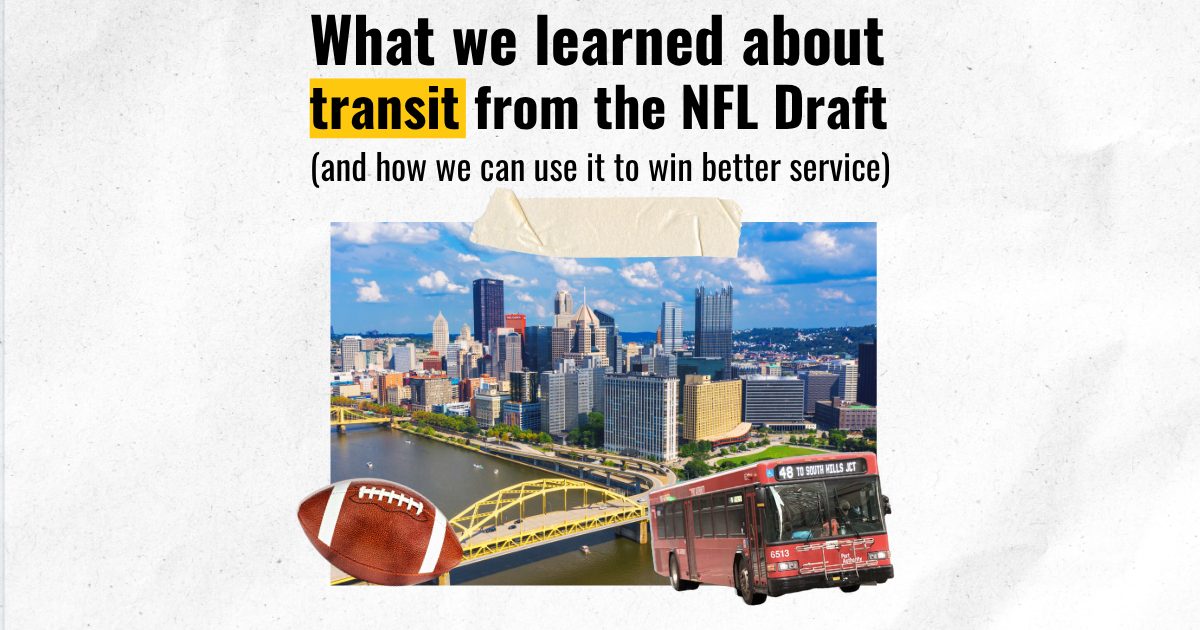
Image Description: photo of Downtown Pittsburgh taped on a paper background, with stickers of a football and a red PRT bus.
New data shows that transit was the star of the NFL Draft—here’s what we learned (and how we can use it to win better transit in the future)!
Public transit is the reason the Draft succeeded! Event buses were full, and the roads were free of traffic. Places that had transit access to the Draft grew crowds; places without it, didn’t.
It pays to pay transit workers! Operators were paid higher wages for working a strenuous event, and they did a fabulous job. We can, and should, pay essential workers according to their high value.
Free fares = better service, higher ridership! They reduce barriers to entry, increase access for low-income riders, and even saves time en-route. Sheetz, the Pittsburgh Organizing Committee and The Pittsburgh Foundation paid the T and “football flyers” fares, so PRT lost no money. Plus, higher ridership actually generates more revenue for PRT (thanks to state funding laws).
Free fares can be implemented for more than just special event attendees; it can benefit low-income riders AND the agency.
People love taking the bus—when it’s easy! Draft service was direct, frequent, clearly communicated, and easily understandable. And it paid off for almost 485,000 rides!
Big events like this would not be possible without a functional, accessible, affordable transit system—all the time. We don’t need to wait for the next big event to roll around to build and fund a transit system that works for our city. We can build one that generates economic benefits, now, for our city.
Promoting transit works! PRT, the Mayor, and the County Executive—not to mention Visit Pittsburgh, local news outlets, and local influencers—regularly promoted the benefits of transit, and urged visitors to hop on the bus to avoid congestion and high parking costs. And it worked!
Image Description: red graphic with Bus Line Refresh logo at the center and white text reads “These Communities Will Lose All Service”.
These communities will lose all service with the Bus Line Refresh proposal – RSVP by 5/27 for your final chance to give feedback on the plan
Whether you live in McKeesport or McKees Rocks, the Hill District or the South Hills, our public transit system needs to work for everyone.
Pittsburgh Regional Transit (PRT) will soon close their community engagement period for the second draft of their Bus Line Redesign (BLR). The redesign proposes a completely redrawn map of where transit routes will run. It includes new schedules for how frequently and how late at night buses and trains operate, and even proposes renaming all the routes in the system.
Tens of thousands of people who use the system every day will be affected. Allegheny County Transit riders, transit workers, businesses, social service providers—we all have a stake in a Bus Line Redesign that works for all.
This is the last opportunity for the public to weigh in before PRT finalizes and ratifies this transit plan- one that will impact our transit service for generations!
Join other transit riders to speak up about impacts of the Bus Line Refresh Draft 2.0 – the good and the bad – at our press conference and public testimony on Friday, 5/29 at 8:30 am at Pittsburgh Regional Transit’s Board meeting.
The Communities Slated for the Greatest Transit Losses under PRT’s Bus Line Refresh 2.0
Under the Bus Line Refresh Draft 2.0, some communities are being proposed for transit service improvements with higher frequency service or new direct connections to critical destinations. Other communities will see transit service cuts- this is the consequence of Pittsburgh Regional Transit deciding to develop a “cost-neutral” plan rather than a more visionary proposal for service restoration and expansion.
In the coming days, we will publish a proposed list of transit service improvements under the BLR 2.0, but right now, it’s most important that transit riders who are slated to lose access to all transit service get a chance to review and respond to the plan.
Below, we lay out the communities in which transit service currently exists, but under the proposed Bus Line Refresh Draft 2.0 will be left little to no service.
We used existing route numbers (not the route numbers proposed in the new plan) to help riders identify whether they will be impacted. Routes are listed numerically regardless of alpha-prefix.
77/P16 – Penn Hills/Plum: Hulton Arbors – 15235, 15239
77/P16 – Penn Hills: Monroeville Trestle Rd and Saltsburg Rd, North Bessemer, Leechburg Rd – 15235
79/P17 – Lincoln Park: Mark Drive, Grove Rd, Chaske St, Mt Carmel Rd – 15206/15235/15147
P76 – White Oak: Rt 48 corridor – 15131
P76 – North Versailles: Rt 30 beyond Walmart – 15235
Major Severed Routes: Where New Transfers May be Required for Current Trips
Some current bus lines are being broken up into 2 or 3 different routes. For riders on these routes, that might mean new transfers where you currently have a direct trip.
We know that 84% of transit trips today taken by PRT riders who use a CONNECT card are direct trips, completed without having to transfer. New transfers can add additional significant time to commutes, can add uncertainty around timing to get to our destinations and more exposure to the elements. Moreover, transit riders who pay with cash will have to pay an additional fare for each additional transfer. We know that riders strongly prefer direct trips over trips requiring a transfer, and so want to ensure that riders have a chance to see and respond to these substantial changes.
Below we list current routes in numerical order, regardless of alpha-prefix, and the point in the route where they have been severed:
1 Freeport Rd at the Waterworks Mall
13 Bellevue/14 Ohio River Blvd/17 Shadeland have been segmented and reassembled in various ways
21 Coraopolis – Coraopolis to Moon/Sewickley
31 Bridgeville at Carnegie Station
41 Bower Hill: Washington Rd at Bower Hill Rd
54 N Side-Oakland-S Side – Lawrenceville/Bloomfield to South Side/Mount Oliver/Beltzhoover/Bon Air
59 Mon Valley – across the Monongahela River
67 Monroeville – Oakland/Squirrel Hill to Monroeville/CCAC Boyce
69 Trafford – Oakland/Squirrel Hill to Forest Hills/Wilmerding/Pitcairn
69 Trafford – to Forbes Hospital
74 Homewood-Squirrel Hill Squirrel Hill to Larimer
75 Ellsworth – to South Side Works
81 Oak Hill/83 Bedford Hill – connections to Hill District Business Area (Centre-Devilliers)
87 Friendship – Bloomfield/Friendship to Morningside/Stanton Hts/Upper Lawrenceville
93 Lawrenceville-Oakland-Hazelwood – Lawrenceville/Bloomfield to Greenfield/Hazelwood
P10/1 – Extend all N1 trips from East Liberty to Downtown to avoid forced transfer
Y47 Curry Flyer from Keeport-Knoedler to Walmart
Join other transit riders to speak up about impacts of the Bus Line Refresh Draft 2.0 – the good and the bad – at our press conference and public testimony on Friday, 5/29 at 8:30 am at Pittsburgh Regional Transit’s Board meeting.
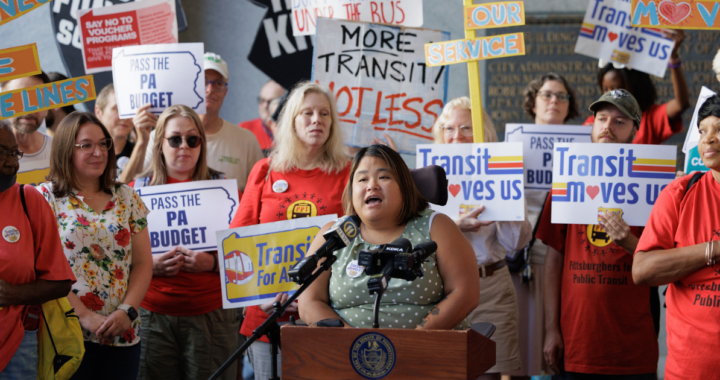
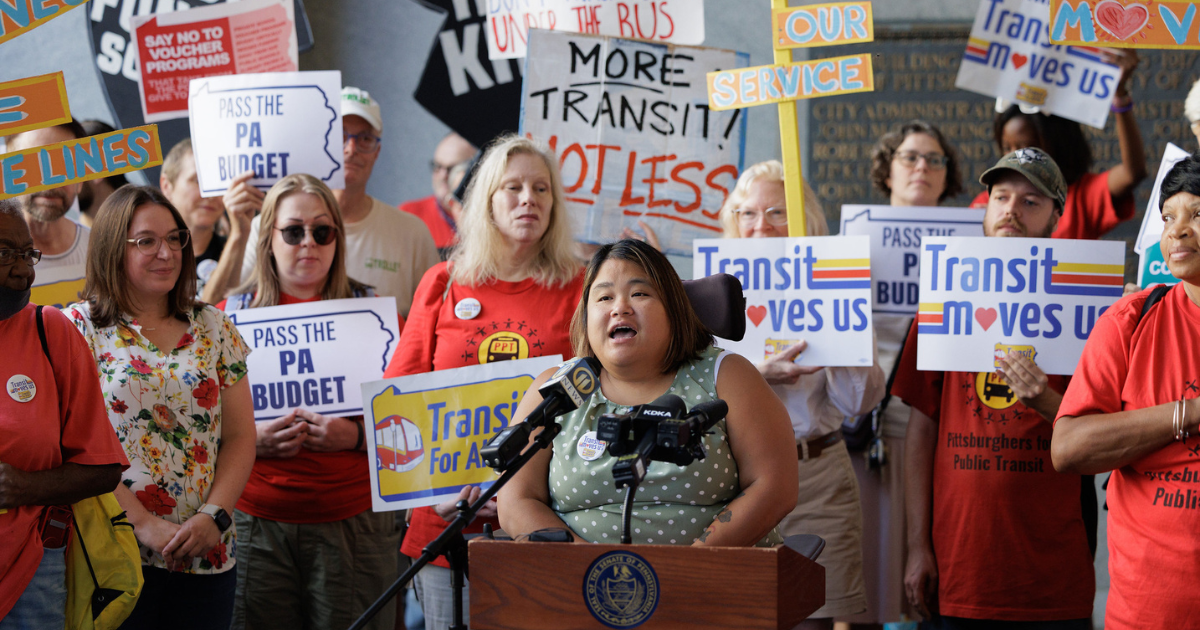
Image Description: PPT Members speaking and holding signs at a summer rally for transit funding
PPT Members are invited to join the leadership team to coordinate the strategic direction of Pittsburghers for Public Transit. Nominations open until July 5th. Voting open from July 8th to August 12th.
Pittsburghers for Public Transit is a grassroots union of transit riders, transit workers and neighbors. We fight for a public transit system that is expanded, reliable, accessible and affordable to all in Allegheny County, with no community left out. We operate as a member-led organization, which means it’s our members who elect our Board of Directors, develop and approve our annual strategic plan, and participate in our different committees to win our campaigns.
Our Board Election Season is a special time for PPT! Every year, the membership holds elections to choose a new round of leaders to serve on our Board of Directors.
to who understand the importance of our work for transit justice in Allegheny County, and are looking to get more involved in directing the course of our campaigns, communications, and actions. Nominations are open until July 6th. If you think you know what it takes to lead our Union, nominate yourself or someone else! The nomination of transit riders, transit workers, Youth, Black people, Indigenous people, People of Color, LGBTQ People, People with Disabilities, Immigrants, and Women are strongly encouraged.
Nominate yourself or someone who inspires you with their leadership, vision, and commitment to transit justice.
More about nominations and voting: 1 seat is open for a PPT Member who is a unionized transit worker. The PPT Board is accepting nominations from any General Members who are interested in running to join the board, but it will soon announce how many seats will be open for election.
The current board members whose seats are up for election are Andrew Hussein, Bill McDowell, Pearl Hughey, and Verna Johnson (who, after three successful terms is not eligible to run again for election).
Our bylaws require that each year’s election reserves a seat for a union transit worker. This person will be elected to the seat that is currently being filled by Sue Scanlon,
Nominations for these seats are open until July 5th. All current PPT Members are welcome to nominate themselves or another PPT Member. Outgoing board members who have served fewer than three terms are able to self-nominate or be nominated by another to serve another term.
PPT members are all those who support the Transit Bill of Rights, have participated in a PPT action or meeting, and have given dues of at least $2.75 cents within the last year (the cost of a single PRT fare).
PPT staff will confirm with each nominee whether they accept the nomination to be on the ballot. Each nominee will also be invited to submit up to 250 words about their background, experience, and vision for the organization. This can be submitted through the nomination form, email, or via phone and PPT staff will transcribe.
All nominee bios will be sent to PPT Members the second week of June and again the first week of July. Bios and photos will also be included in the ballot. Nominees will have 3 minutes to speak at the July PPT member meeting before votes are cast to highlight their vision for PPT and how their skills will help build the organization.
Voting in the 2025 Board of Directors election will open at PPT’s monthly meeting on July 10th, and remain open until the Summer Picnic on August 13th. PPT members cast their vote via an online form that will be shared at the July meeting and emailed, or by calling PPT’s Director.
PPT Board Structure and Expectations
Each July, PPT members vote for leaders to fill seats on PPT’s 5-15 member Board of Directors. Board Members serve a 2-year term. 2 seats must be filled by members of the Amalgamated Transit Union, Local 85 (the union that represents all of the Port Authority’s bus operators and maintenance workers) or another transportation union that represents workers in Allegheny County because strong community/labor solidarity is a central belief of the organization. The other seats are filled by members who have had previous experience with PPT’s work, and are looking to bring their involvement to the next level.
Members of the Board are expected to attend quarterly Board meetings and should also stay engaged with General Membership Meetings on the second Wednesday of each month. Additionally, Coordinating Committee members will need to maintain active lines of communication with PPT staff and other PPT members to advise and assist with the organization’s strategy, tactics, structure, and financial sustainability. Board Members should also serve on one of PPT’s three committees (Organizing Committee, Communications Committee, and Research Committee).
An excerpt of Article IV of PPT’s bylaws with full detail of the expectations and powers of PPT’s board is included at the bottom of this blog.
2025 PPT Board of Directors Election Schedule
Nominations are open until July 6th.
Bios and photos of current nominees will be sent to members before the June PPT meeting and again before the July PPT meeting. Bios will also be included on the ballot.
July 9th, 7pm: PPT Monthly Meeting with Board Nominee introductions and Elections, voting opens
August 13th, 11:59pm: Final deadline for PPT members to submit their ballots online or via phone
Submit nominations through the link below, or by calling PPT’s Director, Laura Wiens, at 703-424-0854:
Excerpt from Article IV of PPT’s Bylaws explaining expectations and operations of our Board:
Article IV – Board of Directors
Section 1: Board Role, Size and Composition
The PPT Board of Directors shall hereinafter be referred to as the Board.
The Board is responsible for managing the business affairs, property, and policies of PPT. The Board shall be composed of five (5) to fifteen (15) members representing diverse interests and areas of expertise that strengthen the knowledge base of PPT. A minimum of two (2) seats will be reserved for members of the Amalgamated Transit Union or any union representing mass transportation workers in the Greater Pittsburgh Region. One of these reserved transportation union seats shall be elected in every second year. The Board shall have charge of the proper, normal, and usual expenditures and other business of the corporation; they shall enforce the provision of these bylaws; they shall abide by the policies and procedures set forth in the Policies and Procedures Manual, and shall enforce the rules and regulations set forth for the management, care, and governance of the property and affairs of the corporation. The Board may employ or appoint such person or persons, or agents, as they deem necessary to further the business of the corporation and shall set and adjust the compensation of all persons or agents so employed or appointed.
The Board will hire an Executive Director who may hire such paid staff as they deem proper and necessary for the operation of the Corporation. The powers and duties of the Executive Director shall be assigned or delegated by the Board of Directors. The powers and duties of the paid staff, other than the Executive Director, shall be as assigned or as delegated by the Executive Director and/or the Board of Directors, in accordance with PPT personnel policies.
Section 2. Qualifications for Board of Directors
Board members shall be elected from the eligible voting, dues-paying membership, and only dues-paying members are eligible to run in the elections. Candidates for the board must have been a dues-paying member for six (6) months prior to an election.
Section 3. Compensation
The Board of PPT shall serve without compensation. Board members may be reimbursed for pre-approved expenses reasonably incurred on behalf of PPT. Nothing in this paragraph is intended to preclude a Board member from receiving compensation for their service to PPT in some other capacity, provided that the transaction has been reviewed and approved by the Finance Committee in compliance with PPT’s conflict of interest policy.
Section 4. Recruitment and Elections
Nominations for new Board members will be made and publicized by the Board, Membership, and/or staff, at least two (2) months before the Membership meeting at which the election will take place. Elections for the Board shall take place every year, with five (5) seats elected in even years, and six (6) seats elected in odd years.
Elections shall be announced verbally at the two (2) immediately preceding membership meetings before the election.
Dues paying members in good standing are eligible to vote.
Bios and platforms of candidates shall be distributed by email to members one month in advance of the vote, and publicized on PPT’s website. Candidates will have three (3) minutes to address the general membership in advance of the election during the general membership meeting. Voting will be open for a minimum of one (1) week.
Section 5. Powers
The government of PPT, the direction of its work, and the control of its property shall be vested in the Board. The Board shall be authorized to adopt such rules and regulations as may be deemed advisable for the government of the Board, the proper conduct of business of PPT, and the guidance of all committees, officers, and employees. The Board shall be empowered to do whatever in its judgement may be calculated to increase efficiency and add to the usefulness of PPT; and to carry out the main purpose of this association provided such action is not in conflict with these bylaws.
Section 6. Limitations
PPT shall be non-partisan and non-sectarian in its activities.
Section 7. Term of office and Maximum number of terms
Directors shall be elected to a term of two (2) years. Board members shall serve a maximum of three (3) consecutive terms.
Section 8. Meeting Attendance Requirement
Board members must attend a minimum of three (3) out of the four (4) quarterly board meetings per year by phone or presence. Failure to fulfill minimum board obligations may be accepted by the board as a de facto or implicit resignation. The Board member will be informed before the publication of such de facto resignation to the members.
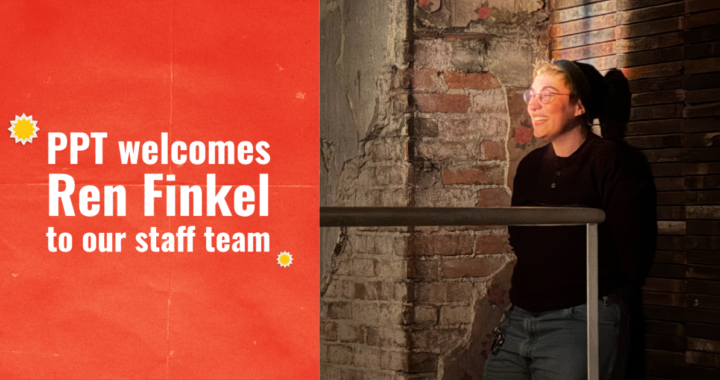
Image Description: a glowy, collaged picture of Ren Finkel, a light-skinned person in dark clothes and round glasses standing against a brick wall in the sunshine.
At the end of 2025, the PPT Board decided to open a new staff position for a Digital Organizer – Data Lead. The Data Lead role would help the team improve its use of digital tools and data to deepen the organizing that’s happening all across Pennsylvania.
The six-month hiring process was not easy. Almost as soon as the job description was opened, the team received dozens and dozens of applications from talented people in all corners of PA. Each candidate brought different strengths to the job, and the team was honored to have received interest from so many people.
But after much discussion, the PPT board is eager to welcome Ren Finkel as the new Digital Organizer – Data Lead to the Pittsburghers for Public Transit/Transit for All PA! Team! Ren brings a combination of data prowess, facilitation expertise, and good ’ol community organizing chops to the position.
There’s no doubt that there’s a bright future ahead for transit rider and worker organizing. Ren is just two weeks into the job, and already, Ren is building systems to deepen supporters’ connection to the movement for transit justice.
Learn a little more about Ren by reading their bio and some interview answers below.
Ren is beyond excited to be joining PPT’s team as the Data Lead. They moved to Pittsburgh in 2012 to study photography. This is when they got their first, starry-eyed glimpse at the power of labor organizing when helping with the adjunct teacher’s successful unionization campaign. They went on to get deeply involved in queer community and the fight for Palestinian liberation. Most recently they’ve had the honor of helping hold the logistics for the Communal Loss Adaptation Project, a disability-justice and grief-work organization. They are over the moon about returning to Pittsburgh after a stint in Philly where they attended (and joyfully dropped out of) rabbinical school and helped unionize their workplace.
When not getting nerdy about spreadsheets and CRMs, Ren is a multimedia artist currently focusing on honing their skills in linocut print making. They worked in food service for many years, and you can often find them cooking giant meals for neighbors and mutual aid distros. In their spare time they are a Talmud scholar and teacher, running the Pittsburgh-based anti-zionist yeshiva Beis Lakish.
The PPT team is excited to have you on board! What drew you to the work PPT is doing?
I’ve been a transit rider for as long as I’ve lived in Pittsburgh, so I know first-hand how much work there is to be done to improve our transit system. I’ve been so hungry to offer my data skills to the movement, so this role at PPT is a really exciting opportunity. PPT has such a keen awareness of how transit justice intersects with so many other liberatory causes, and I know I’ll get to bring my full organizing history to this work.
What work are you excited to do? What victories do you think you’ll help us win in the coming months?
I’m getting to join the team at such a whirlwind moment, with so many different projects and campaigns getting kicked off. I’m just starting to place myself in the ecosystem that makes up PPT’s membership, staff, and board, and it’s immediately apparent how much energy and commitment there is. I am so ready to get nerdy about our systems to help make our team’s work as easy and dreamy as possible. You’ll also be hearing from me about being a part of growing PPT’s membership! Speaking of which…have you considered becoming a PPT member yet to help sustain this work? 👀
What’s your experience with transit? What routes have you ridden during different parts of your life? How has the experience varied between cities where you’ve lived and visited?
Pittsburgh buses have taken me to every corner of this city, especially during my time as a gig worker balancing dog walking, tutoring, and restaurant work. I’ll always love how buses, trains, and trolleys have been a way for me to meet my neighbors and get to see neighborhoods I might not otherwise. I don’t currently know how to drive, so I’ve relied on public transit (and generous rides from friends) my entire adult life.
As I’ve had to start navigating new chronic health challenges, the ways in which hills and staircases often exist between me and getting on a bus has become a growing challenge. Growing up in San Diego has made me really aware of how a limited public transit system can impact a city, and often find myself both grateful for what Pittsburgh has to offer and committed to helping take it from “better than some places” to “truly incredible”!
What inspires you? What gives you energy that you want to share with others?
Whenever I’m feeling overwhelmed or hopeless, I always turn to cooking and slow walks in the woods. They’re the foundation that has made existing possible for me. Whenever I’m feeling isolated or disconnected, making a huge meal to share with loved ones is a surefire way to make me feel a part of something bigger. I have an almost neurotic need to feed my loved ones, which I certainly inherited from my grandmother, may her memory be a blessing. And when everything feels like too much, there’s nothing that quiets my brain more than hanging out with some trees. Whenever my anxiety feels insurmountable, I know it’s time to stare at some moss.
Ultimately, both of these things are about slowing down. Capitalism so badly tries to have us define ourselves by how much we can do and how quickly we can do it. I’ll always be grateful for the wisdom that’s come out of the disability justice movement that teaches us to slow down, rest abundantly, and prioritize caring for one another.
What is your favorite pump-up song?
It’s so hard to pick! My Body’s Made of Crushed Little Stars by Mitski has gotten me through the psychic damage of late stage capitalism more times than I can count, Hard Times by Paramore never fails to wake me up, and This Year by The Mountain Goats has been my “We’re gonna get through this” song since I was a teen.
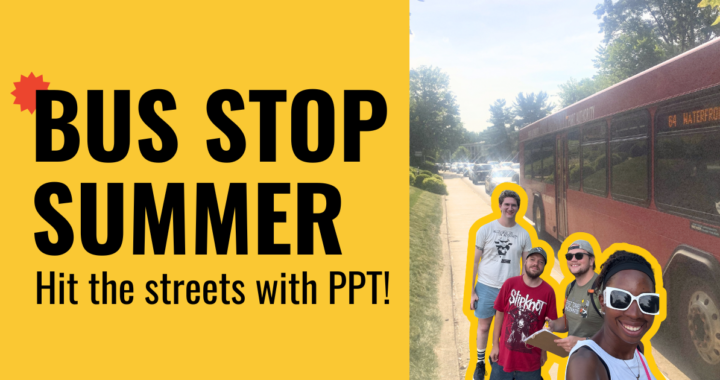
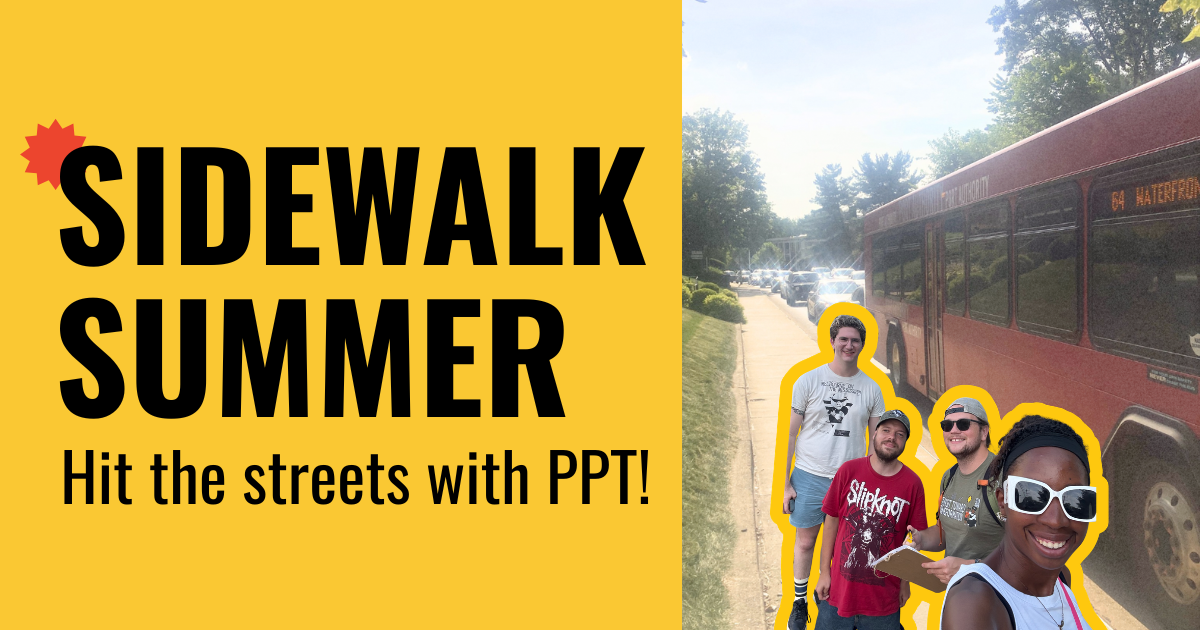
Image Description: PPT members highlighted in yellow, on a glowy background of a bus stop on a summer day.
Bust out those cell phones and lace up those sneakers!
Transit riders in Pittsburgh want more bus shelters, better bus stop amenities and connected sidewalks that take us to and from where we need to go! Our biggest takeaway from two years of bus shelter audits is that we cannot have bus shelters, benches and other amenities installed at our bus stops if our sidewalks are in poor or nonexistent condition.
Following the lead of our friends Pittsburgh Walks, PPT will host a series of sidewalk audits this spring and summer focusing on neighborhoods with high rider bus stops and busy transit corridors.
We will assess the quality of sidewalks in Pittsburgh and record findings via a mobile survey developed by the City of Pittsburgh. The collected data helps the City identify where sidewalks need to be improved or built, prioritize pedestrian infrastructure projects, and make the case for sidewalk funding.
The goal of these sidewalk audits is for participants to learn how to use this new tool and go on to gather data independently. Ultimately we aim to collect information about sidewalks (or where they’re missing) for every street in the City. This is a group effort and WE NEED YOU!
Before the event, participants must watch this 15 minute video.
During the event, we’ll:
Have a lesson on what makes sidewalks safe and accessible, how to use the web application.
Pair up to walk several blocks of neighborhood streets, and record our observations using an online survey on our cell phones.
Requirements:
Must have charged cell phone that can reach the internet and take photos.
Must be able to navigate web browsers and privacy settings on cell phone.
Pittsburgh weather can be unpredictable this time of year! Come dressed for the elements (good walking shoes, winter coats, hats, gloves, etc.). We will be outside for about an hour.
Accessibility:
We cannot guarantee the accessibility or safety of these walks as some of the terrain may have broken to no sidewalks. Some regions may be hilly and harder to walk on.
Blind and low vision people will not be able to use the mobile survey application, but your input is of great value. You will be paired with a sighted person so that you can access the survey.
If you have individual accessibility questions, or to request ASL interpretation, please reach out to Nicole@pittsburghforpublictransit.org.
ASL interpretation must be requested at least 2 weeks in advance.
You can attend on your own, or bring a group of neighbors, friends, family, or coworkers! This is a great way to get your steps in, meet fellow community members, and help make our streets safe, accessible, and enjoyable for everyone!
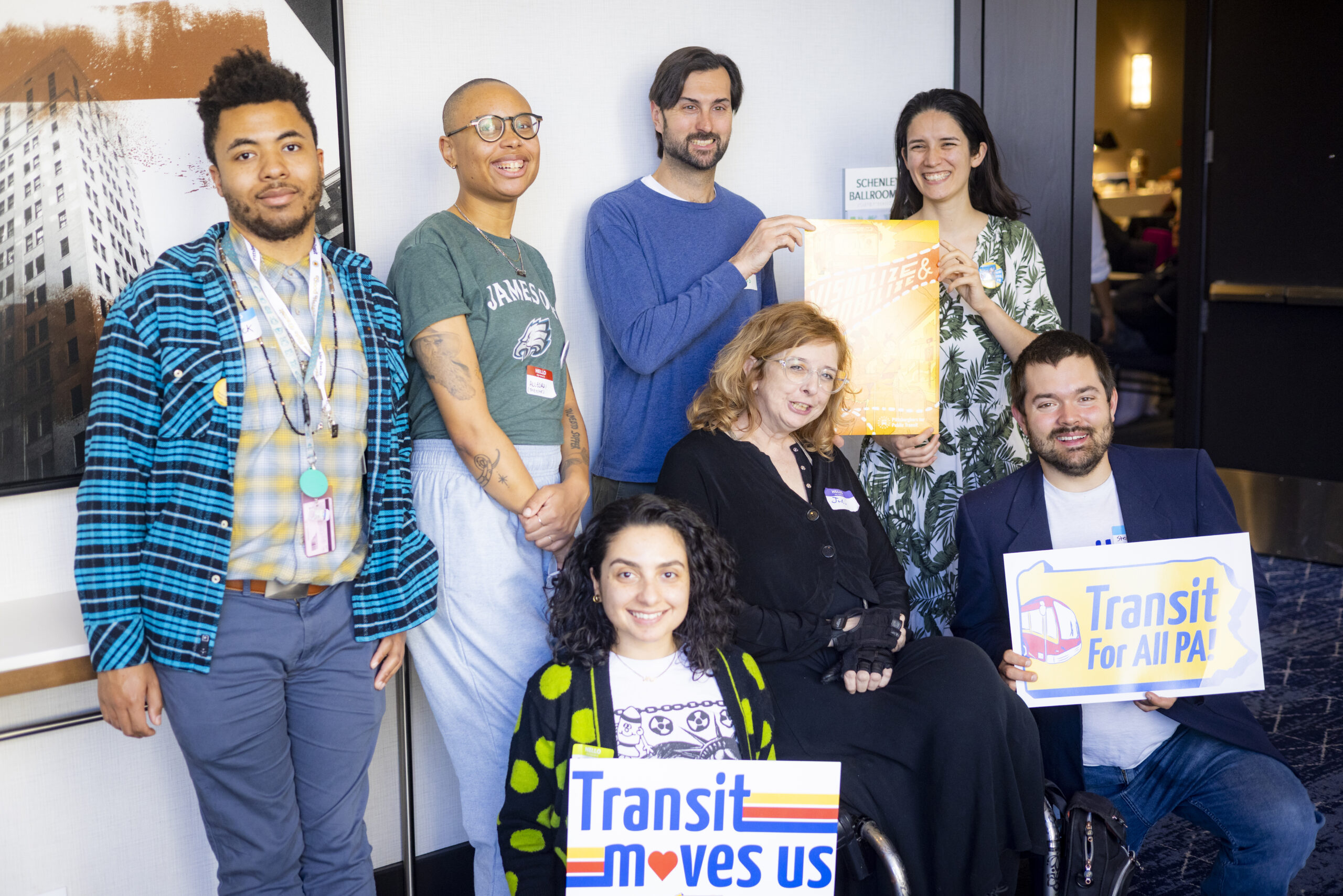
Image Description: Group photo at spring training has 100 people holding up signs and smiling with fists up.
Transit for All means every community – urban and rural, large and small – and thats who the movement is fighting for!
150 transit riders and transit workers from across Pennsylvania and the United States gathered at the end of March to build organizing skill and strengthen community.
The movement keeps on growing! For two days at the end of March, 150 transit riders and transit workers gathered in Pittsburgh for the third-annual Transit for All Organizing Spring Training. Attendees and speakers came from all across PA and the United States. Their purpose was clear: they were there to build organizing skills to strengthen a movement that’s fighting for transit for all – whether in rural communities, small towns or big cities.
The training was organized by Pittsburghers for Public Transit, who leads the Transit for All PA! campaign. The program was jam-packed with opportunities for attendees to learn new skills, learn from victories won in other cities, and meet inspiring new friends from other communities!
Read on for a recap of the two-days or check out photos here!
Day 1 Recap: Welcome to Pittsburgh & the Transit Justice Movement
image description: County Executive Sara Innamorato addreses transit riders and transit workers at the 2026 Transit for All Organizing Spring Training Welcoming Happy Hour
On Friday, attendees from out of town met at the PPT office for a Transit Tour led by PPT Members. The Transit Tour ended at the Welcome Happy Hour hosted at Aslin Brewery in the Strip District.
More than 100 people were in attendance for delicious food and drinks. Some people were new to transit organizing but many were veteran organisers for better public transit. Allegheny County Executive Sara Innamorato even stopped by to welcome people to town and encourage advocates to keep organizing for better transit access!
Day 2 Recap: Training Day!
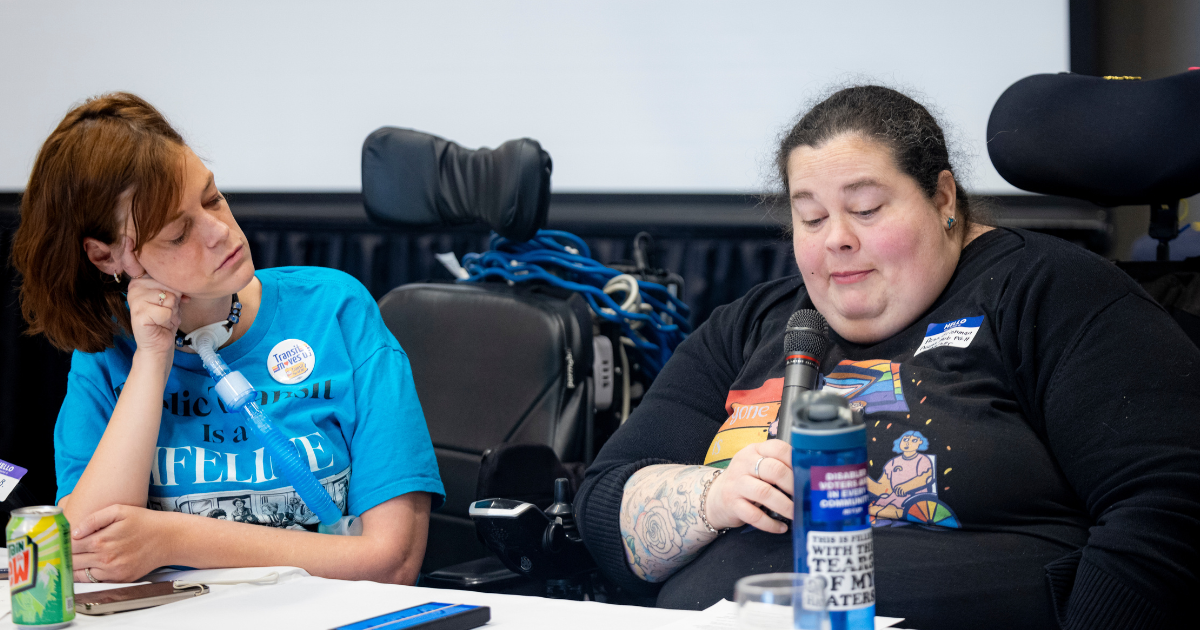
Image Description: Four panelists sit behind a table. One is speaking dynamically and moving their hands as the others smile and laugh. A sign language interpreter is translating in the background.
Day 2 was where the magic happened. Folks woke up bright and early to join for an 8am breakfast and some artmaking with Arts Excurions Unlimited, a community arts group from Pittsburgh’s Hazlewood neighborhood.
By 9am the plenary kicked off, led by Veronica Coptis, Senior Advisor, Taproot Earth. She began the day by driving home a theme that would be central to the training: that rural and urban communities must work together to change a system that moves us all. Veronica leads a number of rural organizing projects and shared that regardless of the community she’s working in, transportation is always a top need. Veronica was joined by Andrew Slack, a PA-based facilitator who led a panel discussion with Kearasten Jordan and Laura Pauls-Thomas, both Transit for All PA! Organizing Fellows from Lancaster, about transit needs in PA’s rural communities and small towns.
image description: Alisa Grishmand and Dr. Jose Badger present on a Transit for All Organizing Spring Training panel
After the Plenary discussion, the energy didn’t stop. There were 7 workshops throughout the day, led by PPT Members and transit organizing experts from PA and across the US:
Narrative Change: Our Stories Build the World We Want, led by Nadia Awad, Content Director, Narrative Initiative, Andrew Slack, PA-based narrative strategist, facilitator, and storyteller, and Clair Hopper, Digital Organizer, Pittsburghers for Public Transit and Transit for All PA!
VoteTransit: Bus Mayor Elections and Beyond, led by Betsy Plum, Executive Director of Riders Alliance (New York City), Barb Warwick, Pittsburgh City Council member, District 5, and facilitated by Laura Chu Wiens, Executive Director of Pittsburghers for Public Transit/Transit for All PA!
Mobile Workshop! Field Communications: Storytelling from the Street, led by Joe Conniff, Video Editor, Educator, and Producer, withremote support from Marcelese Cooper, Teaching Assistant Professor in the Film and Media Studies Program at the University of Pittsburgh
Bargaining for the Common Good: Worker/Community Solidarity, led by Connor Chapman, University of Pittsburgh Graduate Workers Union and Pittsburghers for Public Transit and Ronni Getz, UPMC Magee Women’s Hospital, SEIU Healthcare Pennsylvania
Organizing with Disability Justice at the Center, led by Anna Zivarts, a leading author, transit rider organizer and founder of the Nondriver Alliance out of Washington state, and Dr. Josie Badger, director of the national RSA-Parent Training, Information, technical assistance center (RAISE), and founder of several orgs including the Pennsylvania Youth Leadership Network (PYLN), the Children’s Hospital Advocacy Network for Guidance and Empowerment (CHANGE), and J.Badger Consulting, moderated by Alisa Grishman, founder of Access Mob Pittsburgh and PPT Board member
image description: Two attendees from Transit Riders United in Detroit socialize talk together
Big Tech in Transit: Automation, Microtransit, Surveillance, and Data, led Dr. Sarah Fox, Assistant Professor in the Human-Computer Interaction Institute at Carnegie Mellon University; Director, Tech Solidarity Lab, Sue Scanlon, Transit Operator, Pittsburgh Regional Transit; Pittsburghers for Public Transit board member, and Ziggy Edwards, Leader, Mon-Oakland Connector Campaign
Transit Isn’t Just Urban: Organizing in Small Systems & Everywhere, led by Connor Descheemaker (they/them), Statewide Campaign Manager, Transit for All PA!/Pittsburghers for Public Transit, andT4APA! Organizing Fellows Angela Adler and Laura Pauls-Thomas (Lancaster), Benjamin Felker-Quinn and Andria Ahrens (Lehigh Valley)
Attendees took a break from that great lineup and enjoyed some delicious lunch, snacks, and event took time out for a Movement Moment: Grounding, Accessible Yoga Practice led by PPT Member Mona Meszar, who is a yoga instructor, massage therapist, and community activist!
Spring Training was a blast! And now with these new skills and connections, transit riders and workers are ready to grow this movement.
Missed the training or want to get involved? Join us at the next transit organizing meeting to join the community!
The Bus Line Refresh could be the biggest service change in a generation. Your chance to make it better is right now! Learn how the proposals could impact you—and tell PRT how you feel about it.
Explore the service changes that affect you
There are many ways to explore the changes PRT is proposing under the Bus Line Refresh. You can:
After you do any of these options, it’s critical that you submit a public comment telling PRT how these changes would affect you. They need to know your thoughts in order to incorporate them into the proposal!
Note that this method requires access to a mobile device, like a smartphone. If you don’t have access to one, we recommend using the other tools listed above to explore the proposed Bus Line Refresh.
Download the Transit App to your mobile device. The app is available on both iPhone and Android. (Bonus: the app can be used to plan your future transit trips, and can even give you notifications when service changes or advocacy opportunities are available!)
You may need to make an account to use the app.
In the app’s main screen, type a destination in the “Where to?” bar. Select it from the list of results when it appears.
Once you’ve selected your destination, you can also edit your starting location—for example, you might want to understand how your commute from your workplace to your doctor’s office might change.
In the white portion of the screen, you’ll see a selection of potential routes you could take to reach your destination. The trips at the top are those you could take under the current PRT system. If you scroll down below these, you’ll see a section titled “PRT Preview Mode”, with potential future routes listed.
Click on a future route you’d like to explore. The app will then show you a map of the route, with details on how long the trip would take you, as well as scheduled frequencies and stops.
At the bottom of this window, there is a banner with a button titled “Give feedback”. This will take you to PRT’s feedback page for the entire Bus Line Refresh project.
When you’re done exploring this route, be sure to press the red “X” button at the top right of the screen to exit preview mode.
If you or someone you know takes transit frequently, PRT needs to know your thoughts. There are a lot of ways to give feedback on the proposed Bus Line Refresh:
Find your routes from an online list, click their new names, and leave route-specific feedback