We Can’t Afford to Wait for Housing: 10 Years After the Penn Plaza Mass Displacement

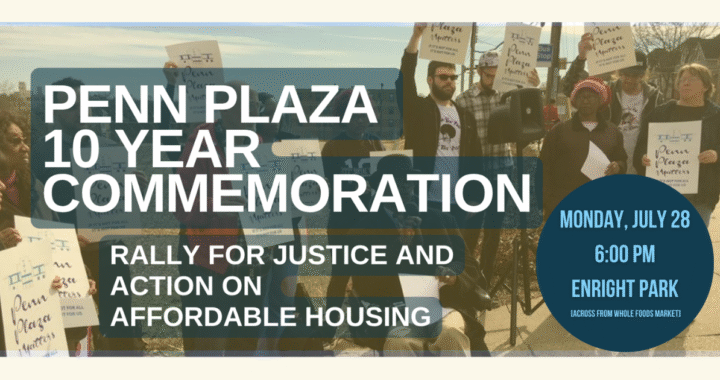
image description: event flyer has a photo of a Penn Penn Plaza Support & Action rally with text that says “Penn Plaza 10 Year Commemoration Rally for Justice & Action on Affordable Housing. Monday July 28 6pm Enright Park”

Join the 10-Year Penn Plaza Rally to Demand Affordable Housing Solutions NOW – July 28th, 6-8pm, East Liberty

Ten Years Later: Penn Plaza Refugees Speak Out and Demand Action on Affordable Housing

It’s been ten years since the mass displacement of hundreds of residents of the Penn Plaza apartment buildings in East Liberty, at the intersection of Penn and Negley. The site where Penn Plaza stood held over 300 affordable apartments where families had lived for more than 40 years… While a Whole Foods and a massive parking garage now occupy the same site that used to hold hundreds of affordable apartments, the struggle continues to fight displacement and keep Pittsburgh home for all.

Pittsburgh’s Housing Justice movement has had some serious wins that have been propelled by the resident-led movement to fight the Penn Plaza evictions. On this 10-year anniversary of the evictions, past residents, neighbors, and supporters are getting together to honor the Penn Plaza story, reflect on lessons, and uplift housing justice demands.

Join us on July 28th, 6-8pm, starting in Enright Park in East Liberty for a rally and march through East Liberty. We will hear from residents who were evicted from Penn Plaza and remember the many who have died during (and because of) the displacement. We will walk down Penn Ave, stopping at the Kelly Strayhorn Theater where a black-led arts organization is under threat of displacement and other locations important to the Penn Plaza story. We will end at the corner of Penn Ave and Shady Ave where advocates were able to win affordable units that can house Section 8 voucher-holders, and demand that City Council pass an Inclusionary Zoning policy and make other important changes to ensure that other families will not experience the harms that the Penn Plaza refugees have lived through.

Video Description: featuring Helen Gerhardt, of PPT and Just Harvest, and Myrtle and Mabel, Penn Plaza refugees and members of the Penn Plaza Support and Action Coalition

The Story of Penn Plaza

In 2015, hundreds of residents, many of them seniors, received a letter from LG Realty that they would be required to move within ninety days. It was clear that the company had planned this for years and would be forcing hundreds of long-time residents from their homes with short notice. Most of the residents had lived in East Liberty for decades and had built community and networks of support there. With the accelerating gentrification happening in the neighborhood, they could not find housing nearby.

This sparked community outrage and hundreds mobilized to defend their homes, communities, and neighbors, culminating in the Penn Plaza Support and Action Coalition, of which PPT played a key role. 

LG Realty failed to meet even the minimum requirements of the Memorandum of Agreement with the residents before the sale took place. They turned off heat in the bitter cold winter months, started removing windows and asbestos tiling while residents were still living in the property, and sought to create an inhospitable and hostile environment. Most of the residents ended up in unstable housing situations, displaced to areas far outside the city with limited to no transit options, and were left with immense trauma from their forced removal. 

Penn Plaza is the largest mass displacement in recent Pittsburgh history, but it is far from the only one. In 2009, on a site right down the street from Penn Plaza, the 519 unit East Mall public housing was cleared to make way for the Target. During that decade, East Liberty street vendors and local businesses were also cleared in favor of luxury retail brands, tech offices, and national chains.  Despite the lessons of the early 2000s, the displacement of low-income families has only continued to accelerate. Census data shows that 7,000 people of color left the City of Pittsburgh in just the four years between 2014 and 2018.

The Penn Plaza struggle has become synonymous with the harms of gentrification and the consequences of a lack of a just housing policy in Pittsburgh. It brought the housing struggle front and center and forced the city to contend with the fight for housing justice as a fight that will not be silenced and cannot be ignored. 

The Penn Plaza Fight and Affordable Housing’s Relationship to Transit

Transit riders across the city are being pushed out of the City and away from access to good transit because of the lack of affordable housing. This is bad for transit riders and our transit system.

The East Liberty Transit Center, a key stop on the MLK East Busway, is located less than a half mile from the former Penn Plaza site. The Penn Plaza residents, many of whom were core transit riders, were forced to find housing in communities that have worse transit access – like Verona, North Versailles, and Penn Hills. This means it is even harder for these people to get to jobs, healthcare, food, schools, childcare and the social connections that are the foundation of a healthy, thriving life. And it means that out transit agency loses riders (which results in lower funding from the state, which results in transit cuts and fare hikes, which again lowers ridership…and the downward spiral continues!)

PPT continues to fight for dense and plentiful affordable housing in neighborhoods that have the best access to transit, grocery stores, jobs, and education because it helps transit riders and it helps our transit system. When we prioritze the needs of our most marginalized communities, and support our public systems, we benefit everyone.

Organizing for Solutions

Since 2015, PIttsburghers for Public Transit, along with partners in the Pittsburgh Housing Justice Table, have been organizing for solutions to ensure that low-income transit riders can afford to live in the communities that they call home- and where transit access is accessible and robust. In 2017, we hired Penn Plaza leader Crystal Rivera-Jennings as our Housing and Transit Organizer. She developed and led a survey of displaced transit riders, asking about the impacts of displacement on costs, time, and access to critical needs, and showing that the combination of housing insecurity and transit inaccessibility caused riders to increase job commute cost and commute times to work, and to participate less frequently in social and community events. 

In 2019, PPT organized for and won affordable housing and free transit passes for the future residents at the Giant Eagle Shakespeare site in East Liberty alongside partners Just Harvest, Pittsburgh United and the Pittsburgh Food Policy Council. In 2021, we included demands around affordable housing and transit through equitable transit-oriented development and citywide inclusionary zoning in the Pittsburgh 100 Day Transit Platform for incoming Mayor Ed Gainey. These proposals were ultimately included in Mayor Ed Gainey’s transition plan, in which Pittsburghers for Public Transit played a key role. PPT is currently developing equitable transit-oriented development policy recommendations for the City of Pittsburgh as a member of the City’s Comprehensive Plan Steering Committee.

In 2025, PPT organized dozens of riders alongside members of other partner orgs like 412 Justice, 1Hood, The Human Rights City Alliance, Pittsburgh United and Lawrenceville United to win a positive recommendation from the City of Pittsburgh Planning Commission for citywide inclusionary zoning. Citywide Inclusionary Zoning would require new developments of 20 units of more to set aside a minimum of 10% of those units as affordable units (which could also be paid for with housing choice vouchers). This policy has been recommended as part of the solution to the affordable housing crisis for the last 10 years, with the first report calling for its implementation coinciding with the Penn Plaza mass eviction in 2015. 

>>Read Neighborhood Community Development Fund Director Mark Masterson’s op-ed about the need to implement Citywide Inclusionary Zoning NOW.

TAKE ACTION! Join us on Monday 7/28 at 6pm as we take the fight to the streets to hear from Penn Plaza refugees and recognize the trauma of their mass displacement, and fight to ensure the passage of real solutions to stop gentrification and displacement. 

It’s time for Board Elections! Meet this year’s candidates and cast your ballot before 8/13/25

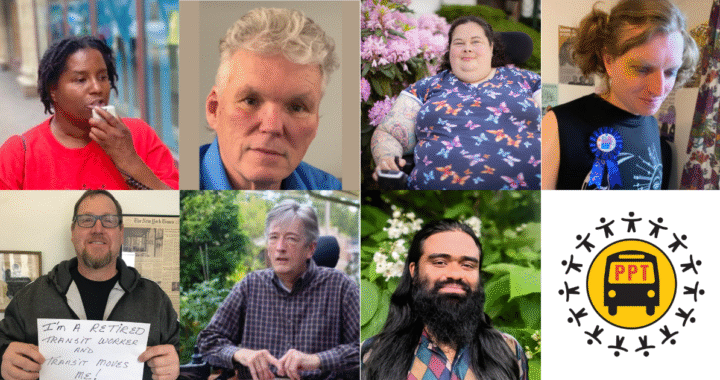
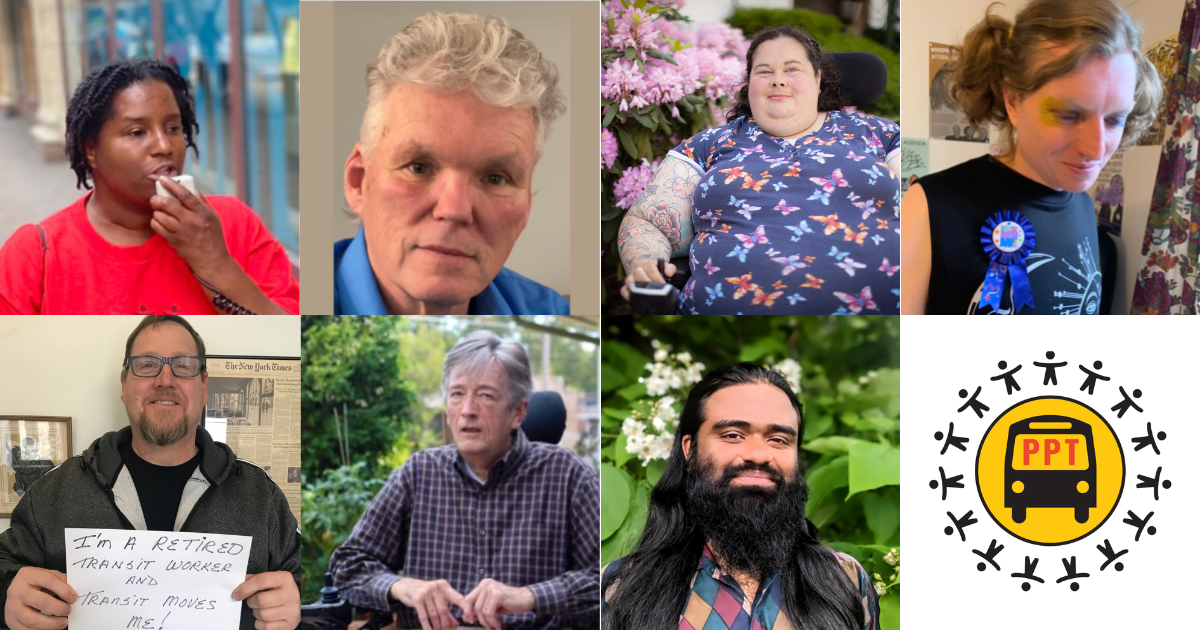
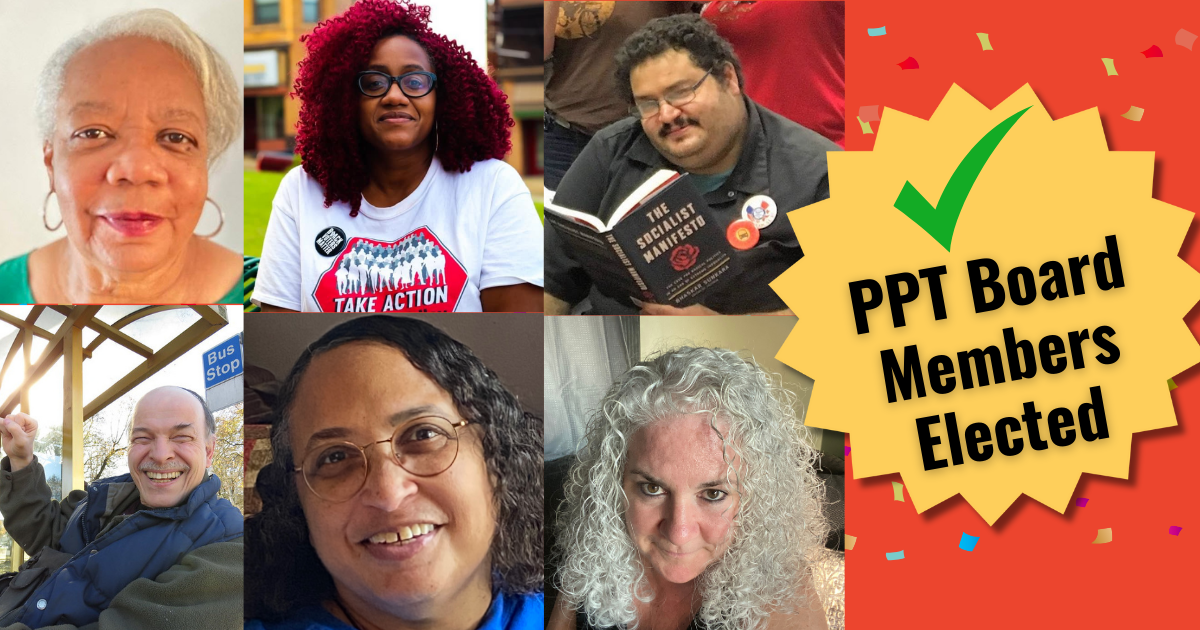
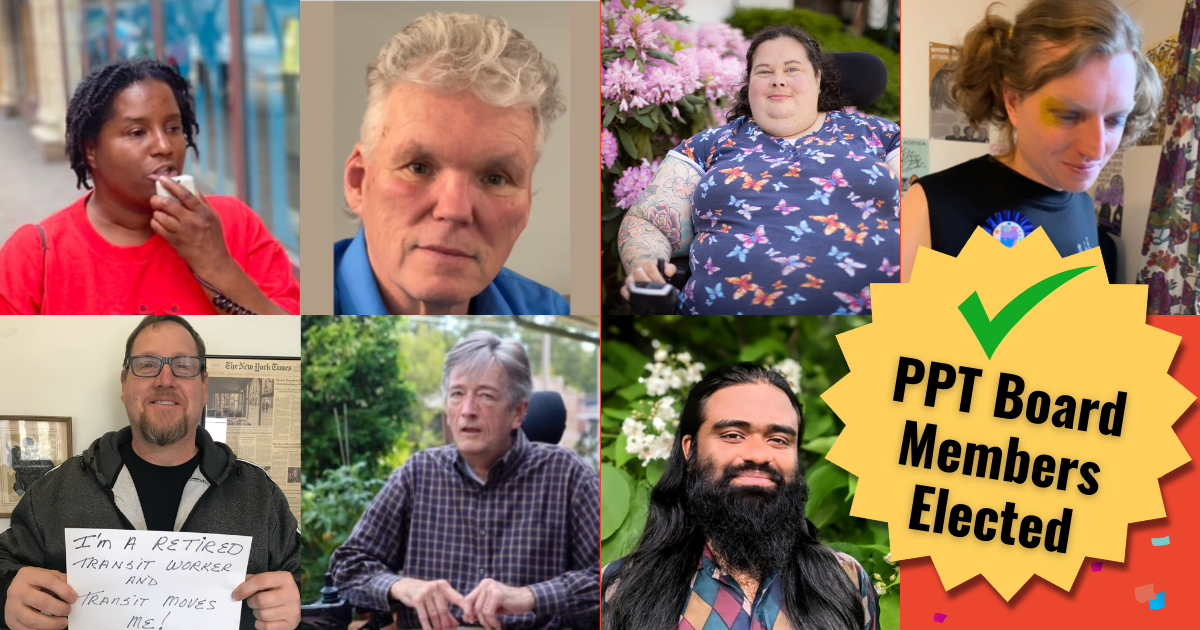
image description: collage of photos of the 7 members running in PPT’s 2025 Board of Elections!

PPT’s election for our Board of Directors will run from July 9th-August 13th. All PPT Members in good standing should cast their ballots for our next leadership team!

Please read this blog with bios on all the candidates before casting your vote. An overview of our election process is at the bottom of this blog.

We are excited to announce the following candidates who were nominated to join the PPT Board of Directors. PPT Members can vote for the next round of leaders who understand the importance of our work for transit justice in Allegheny County and across Pennsylvania – leaders who are looking to become more involved in directing the course of our campaigns, communications and actions.

Learn more about the nominees in their bios below and select the one who you feel can help usher our organization and movement into a new era of advocacy, grow our community and our member leadership skills. 

As a reminder, there are 7 Board Seats open for elections. All elected Board members will serve from August 2025 to August 2027.

All candidates are listed below in alphabetical order by last name. There is a photo and short bio for each candidate to give background on their past work for transit justice and other issues. Each nominee has approved and contributed to their bio.

PPT Members can vote for up to 7 of the following candidates to fill PPT General Member seats on our Board of Directors:

  • Teaira Collins (she/her)
  • Tom Conroy (he/him)
  • Alisa Grishman (she/her)
  • Gabriel McMorland (she/her)
  • Paul O’Hanlon (he/him)
  • Paul Vereb (he/him)
  • Abhishek Viswanathan (he/him)

Teaira Collins (she/her)

Image description: Teaira Collins holds a megaphone while speaking at a PPT rally in 2020

Teaira Collins is a lifelong transit rider, a Hazelwood community leader, a mother and foster mother, and now a grandmother to six grandchildren. Ms. Teaira met Laura Chu Wiens while at Port Authority testifying for improved transit service in Hazelwood, and has since become a leader in PPT’s Our Money, Our Solutions campaign for weekend service on the 93 and the extension of the 75. Ms. Teaira spoke at the City Council Capital Budget hearing press conference about the Mon-Oakland Connector alongside Barb Warwick, and on behalf of PPT during the Poor People’s Campaign Jubilee Caravan. She recently traveled to Atlanta on behalf of PPT on a delegation to connect with other Human Rights organizers across North America, and raise the important connections between public transit, housing, healthcare and food access. She is very active in the community, volunteering with The Mission Continues to help veterans and with the Hazelwood Family Support Center to uplift young mothers. Ms. Teaira also runs her own non-profit to advocate for those like her son Judah and other families with children who have Down Syndrome, and fundraises for the National Kidney Foundation to help research related to her daughter’s health. 

Ms. Teaira’s motivated to fight for more and better transit service alongside the need for more funding, and has been leading annual lobby and visits to legislators in Harrisburg to educate them on the impact and need for transit funding. She is dedicated to continue organizing for a free low-income fare program because it is needed now more than ever for all communities. Ms. Teaira Collins has been:

  • A Hazelwood leader in PPT’s Our Money, Our Solutions campaign to create a resident-based mobility alternative to the Mon-Oakland Connector. She was integral in winning weekend service on the 93 for Hazelwood residents during that campaign.
  • A PPT organizing fellow for the FairFares campaign and helped sign up dozens of riders for the pilot program
  • A Volunteer and community advocate for The Mission Continues, Hazelwood Family Support Center, PPS PTA, and for people with Down Syndrome and Kidney Disease.
  • A Member of the Pittsburgh Food Policy Council Board of Directors

Tom Conroy (he/him)
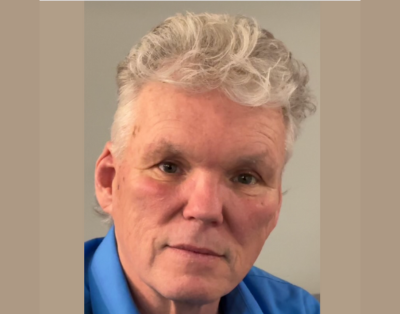
Image Description: Tom wears a blue collared shirt on a light colored background and is looking at the viewer with an open expression. 

Tom Conroy has  both a strong Union background and entrepreneurship. Tom was a bus operator for PRT for 19 years, the last six years of his employment as the union Boardman at Collier garage which gave him a seat on the board of ATU local 85. He was also the shop steward at a small union medical supply company for Teamsters local 249 for a year in the mid-1970’s. He helped my wife manage a successful hair salon from 1980 until she retired in 2022. They both took many classes and seminars on not only the technical side of our profession as barber/stylists but also classes on communication and people skills.Tom Conroy was involved with PPT when it formed. He attended the rallies to bring back service to South Baldwin, helped at a neighborhood workshop to organize those residents to fight for restored service. He’s travelled to Harrisburg several times with PPT and Local 85 to protest and rally for funding, and testified at PRT board hearings and attended a city hearing for affordable housing. He’s recently attended marches to support our immigrant community and to fight back the MAGA agenda. He completed the Organizing Fellowship with PPT this past winter/spring, and intends to remain a member of the organizing committee. Tom was also a past member of the ACLU (now signing back up!), and is becoming active in the newly formed block watch in his community. 

Alisa Grishman

Image Description: Alisa is smiling and wearing a blue shirt with buttons and butterflies with her brown hair pinned back, with pink flowers and landscaping in the background.

Alisa has been a member of PPT for many years now, and has participated in many campaigns including the Fair Fares Campaign and Transit For All PA! She has served on the Board of Directors for four non-profits, so brings a lot of experience from that sector as well. She hopes to continue PPT’s efforts to be inclusive and equitable in all that it does.

Alisa led the effort to make PRT revise its views on allowing open strollers on buses, leading to their creation of their first official policy on priority boarding for people with disabilities. She participated in multiple Harrisburg trips with Transit For All PA! to secure funding for the continued working of public transit in the state. Alisa has spoken at PRT Board meetings, amongst other events, to help pass the Fair Fares program.  She is the founder of Access Mob Pittsburgh, a disability justice organization that seeks to improve the lives of people with disabilities through positive advocacy such as education and economic incentives.  Alisa co-hosted the Week Without Driving with PPT, BikePGH, and AARP to bring awareness to the 30% of people who don’t drive and advocate for better sidewalk, road, and transit accessibility.

Gabriel McMorland (she/her)

Image Description: Gabriel McMorland smiles, looking down, with a blue ribbon on her shirt

Gabriel is a white trans woman, who is also blind and transit-dependent. She has been active with PPT since 2015, and was previously on the Coordinating Committee from 2017-2022. Gabriel was very involved with the Don’t Criminalize Transit Riders campaign and early service campaigns, and on the current campaign around scooters and sidewalks. She was the Community Organizer at The Thomas Merton Center from 2014-2017, and TMC’s Executive Director from 2017-2023, doing work that ranged across racial justice, ecological defense, labor solidarity, immigrant rights, and other moves towards liberation. She is also a musician, and played bass in the live performance of Wheels on the Bus at PPT’s end-of-year celebration. 

Gabriel invests time and leadership into PPT because she needs PPT to succeed. She has seen many times how PPT includes the sidewalks, curb cuts, and crosswalks as part of the overall transit system, and how PPT has centered people with disabilities to ensure that everyone’s needs are served. She believes that the outcomes of PPT’s work are practical, tangible, and truly affect peoples’ lives: PPT enacts its radical values of racial justice and worker justice, and makes them real through organizing. Gabriel’s vision for PPT is to ensure that organizing and leadership development continue to be at the heart of PPT’s work. 

Paul O’Hanlon (he/him)
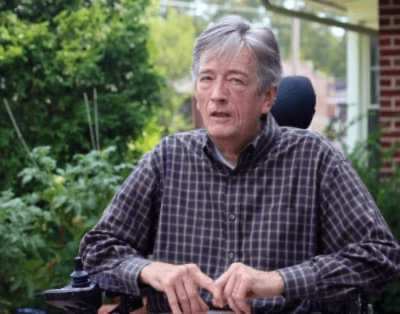
Image Description: Paul O’Hanlon sitting in his wheelchair with a purple checked shirt outside in a garden.

My name is Paul O’Hanlon, I’m a retired lawyer.  From 2001 to 2014, I worked for a disability rights law firm, and before that I was the Senior Housing Attorney and Housing Unit Chief with Neighborhood Legal Services Association in Pittsburgh.

I caught the “transit bug” in 1991.  At that time Port Authority began the long process of becoming accessible to passengers in wheelchairs.  Since that time I’ve been involved in advocating for the best, most accessible, area-wide and affordable public transit.  

I have been involved in a number of advocacy issues in Allegheny County, particularly around housing, accessible public transportation, and voter engagement.

Paul Vereb (he/him)
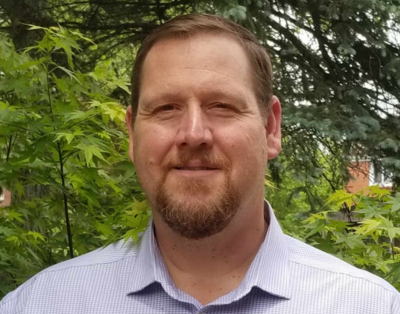
Image Description: Paul is smiling in front of a leafy green tree, wearing a pinstriped blue collared shirt and looking at the camera. 

Paul is a retired transit maintenance supervisor who stressed safety and efficiency while employed at PRT and he understands the importance of keeping transit affordable and reliable. Paul realizes the need of effective transit for people who rely on our system, and the personal and communal affect any changes could have on our region. He also brings a worker’s perspective to the table. Although Paul’s retired, he’s a firm believer in riders and transit worker’s rights, safety, and the pursuit of a thriving system.

Paul recently participated in the PPT Fellowship program which included a rally/press conference concerning the Bus Line Redesign. He’s rallied in Harrisburgh with ATU Local 85 and spoken to Representatives and Senators in support of sufficient funding for transit. He partcipated in the spring training, giving an important and often overlooked worker’s perspective. He circulated a petition to save our routes, jobs, and service, while visiting the garages during Transit Worker Appreciation Day, garnering nearly 100 petition signers to fund transit. 

Abhishek Viswanathan

Image Description: Abhishek is smiling in front of green leaves and white flowers, with long flowing dark hair and a beard, and a colorful diamond patterned shirt.

Abhishek is a lifelong transit rider (in various cities and countries) and he’s invested in making Pittsburgh’s transit system accessible, equitable, and exciting to use. He have been working with PPT for several years in various capacities, always ensuring that transit riders and workers are the main priority. His background is in data science and I have used my skills to create maps and tools for riders to better understand the impact of changes to the transit system. Abhishek also introduces his students to local transit datasets so they can work with data that is grounded in services that thousands of people (including many of them) use daily. 
Abhishek also has experience with labour, environment, and anti-carceral-tech organizing in Pittsburgh. His vision for PPT is to bring more riders and students into the fold, amplify rider and operator voices through data storytelling, and use our broad base to push for increased accessibility and affordability. He also hopes that through intersectional organizing, PPT can connect with other social justice organizations to build a city that we can all thrive in.

Some key campaigns in which Abhishek has played a vital role include

  • Securing equitable infrastructure, particularly for improved bus shelters
  • Evaluating the Bus Line Redesign to ensure it works for All 
  • Developing the Riders Vision for Public Transit 
  • Developing a Transit Fellowship in the South Hilltop 
  • Banning Facial Recognition and other surveillance at CMU
Overview of PPT’s Board Election Process

Pittsburghers for Public Transit is a grassroots, democratic, member-led organization that fights for racial justice and public transit as a human right. The election of a Board of Directors from and by our general membership is a cornerstone of what keeps us accountable to our members. The Board is responsible for strategizing and executing the organization’s campaigns, overseeing the staff and direction of the organization, and for financial oversight. 

The Board’s Executive Committee chooses how many seats will be up for PPT’s board election each year. Our bylaws say that our Board can be anywhere from 5 to 15 people and that 2 seats are reserved for transit workers connected to a local transit union. Earlier this year our Board’s Executive Committee decided to open 7 seats to be elected from our general membership, with a minimum of one transit worker to be elected to the Board this cycle.

Each spring, the PPT membership nominates fellow members to run for the Board of Directors. If those members accept the nomination, then they are invited to submit a photo and bio to be placed on the ballot, and they are invited to speak about their qualifications at the July General Member Meeting.

PPT Members in good standing can cast their ballots for two weeks in July. The nominees with the highest vote totals are invited to join the Board of Directors for a 2-year term.

How can PPT members vote?

PPT Members in good standing can cast their ballots from July 9th to August 13th using the form below. The nominees with the highest vote totals are invited to join the Board of Directors for a two-year term. As a reminder, all active PPT members commit to doing the following:

  1. Agree to uphold PPT’s Transit Bill of Rights. 
  2. Contribute their time over the past year and/or financial resources to help us grow our movement for transit justice. Members can contribute their time and help build power by participating in our monthly meetings, volunteer-led committees, campaign organizing drives, rallies and events.

If you are unsure of your PPT Membership status, you can check by email (info@pittsburghforpublictransit.org) or by phone ( 412-626-7353 ).


PPT Members can vote below:

Tell Our Legislators: No State Budget Without Transit For All PA!

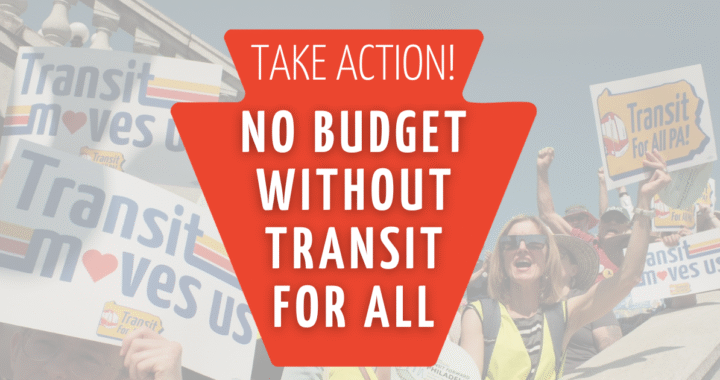
Image description: big red keystone shape with the text “No Budget Without Transit for All”

Transit riders are pushing back against cuts that are being proposed across the state. We have put forward a legislative package that would expand transit in every corner of Pennsylvania. Now we need your help.


Transit riders have put forward the Transit for All PA! legislative funding package that would EXPAND transit service across the state. The time is now to write your reps and sign on as a co-sponsor.

Whether the cuts that have been proposed in Pittsburgh, or in Philadelphia, or in other small towns across our state, transit riders are done with decline (if you’re from Pittsburgh and you want to get involved in fighting against the proposed cuts, check out our toolkit here). We organized throughout the spring to create a slate of ideas that would generate enough funding to expand service levels in Pittsburgh and every PA County. Then we organized and convinced our legislators to introduce them as bills in the House and Senate. Now we need to keep on organizing to make our dreams a reality.

Overview of Transit for All PA! funding package

Our goal goes beyond maintaining our current levels of austerity service. Instead, we at Transit for All PA are aiming to restore transit service statewide to 2019 levels, with an additional 10% service expansion in regions outside of Pittsburgh and Philadelphia

To do that, we calculate that $537 million is needed in new funding for FY 26. We are looking to uplift Governor Shapiro’s proposal to increase the allocation of the existing sales tax to fund public transit, but also to expand on it with commonsense and achievable tax reforms to ensure that we can stabilize, restore and expand transit to meet all our communities’ needs.

In order to reach this goal, we need to propose funding sources that will meet this need and which will increase year over year to meet inflation. Moreover, these funding mechanisms should be:

  • Politically viable 
  • Quickly enacted
  • Not disproportionately burdensome to marginalized, disabled or low income populations
  • Related to transportation
  • Ideally non-competitive to other basic needs through the General Fund, and dedicated to public transportation

To find a solution, we underwent months’ worth of research and held lengthy discussions with hundreds of stakeholders statewide. We believe we can meet our goal with three collective funding mechanisms, together with the Governor’s proposed sales tax ALLOCATION increase.

PRT’s proposed cuts. How we stop them and win service expansion:

If PRT doesn’t get this funding, they have proposedd that the entire system would see a 35% decrease in service and a 9% increase in fares. Paratransit service would be cut a staggering 62%, and fares would increase 20%.

We know that transit is a public necessity, connecting people across our region–no matter their neighborhood, income level, or ability–to jobs, healthcare, food, and community. The state government’s budget proposal will revoke access to these lifelines for thousands.

Alongside our partner coalition Transit For All PA!, we’re calling on our elected officials to find a stable, alternative funding source for public transit–one that restores transit funding and service to pre-2019 levels across the state, from Pittsburgh to Erie to Philly and everywhere in between.

Our movement is strong. Will you join this Member Drive to make it stronger?

Transit service is at risk in Pittsburgh and across PA. Pittsburghers for Public Transit is meeting this moment with phenomenal organizing. We are mobilizing advocates all over our state to fight for service, with no one left behind.

Will you join as a dues-paying member during our Mid-Year Membership Drive to build this movement?

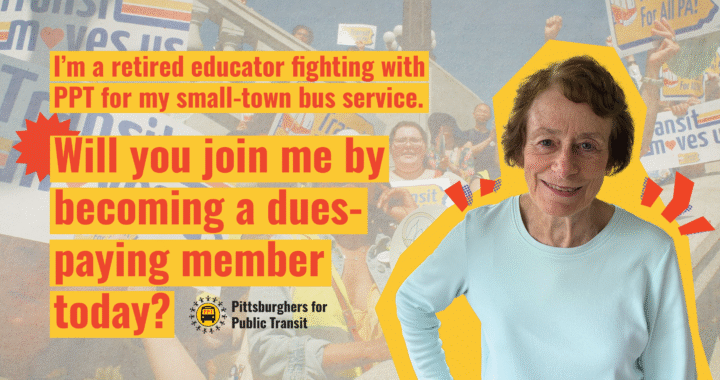
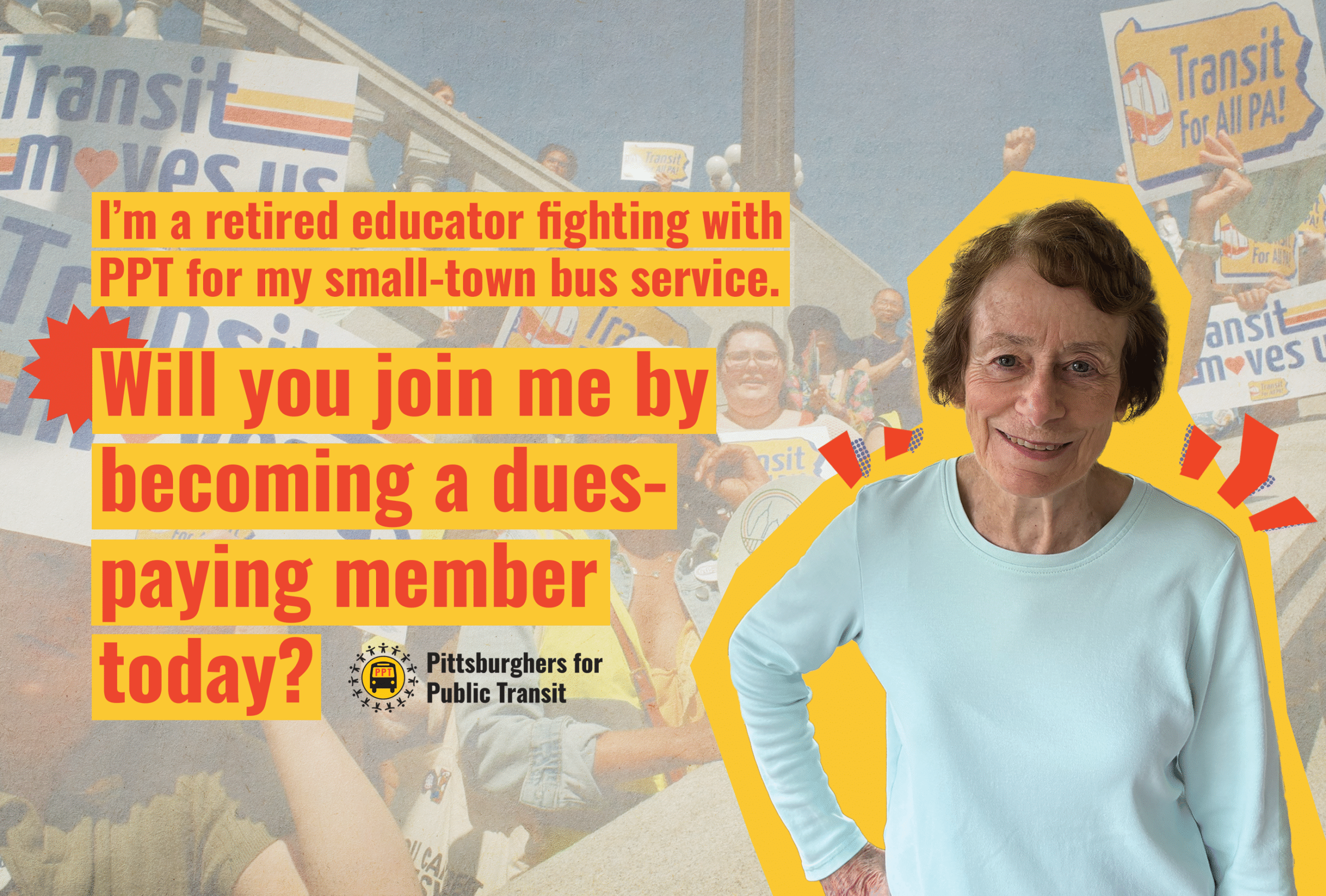
I’m a retired educator fighting with PPT for my small-town bus service. Will you join me by becoming a dues-paying member? 

My name is Joan Monroe. I live in Trafford, PA, a little borough east of Allegheny County. Public transit is important to me because it is the lifeblood of my community.

My community relies on public transit to access jobs, healthcare, family, and more – not to mention all those who take the bus to Trafford to shop and work! I started organizing Trafford to support transit in 2024, after Pittsburgh Regional Transit’s proposed Bus Line Redesign threatened to cut all our bus service. Then, in March 2025, PRT announced that without more funding from the state, it would have to slash all its service by 60% or more—with the worst cuts borne by senior citizens and people with disabilities who ride paratransit.

Even worse, since the funding crisis is statewide, every transit system in PA—including Westmoreland county transit—would have to make similar cuts, endangering their existence altogether. 

I wasn’t about to let that happen. I’m a retired union member, so I know the value of public services—and I know that if we organize together, we can fight for them and win. 

I knew I had to step up my organizing, and I knew PPT would help me do it.

With support from PPT’s statewide coalition, Transit for All PA!, I mobilized my community to contact our senator—who just so happens to be the PA Senate President Pro Tempore. Together, we even got a billboard put up in the middle of Trafford with her phone number!

Image description: photo of the electronic billboard that Joan was able to place in Trafford. It features a cartoon bus and bold text reading “Trafford’s bus route is on the chopping block”, alongside phone numbers for legislators.

This is why I am a member of PPT, and why I think you should join us.

Our Transit for All PA! Coalition is the only group that has proposed a real solution to this crisis—one that is realistic, achievable, equitable, and responsive to transit riders’ and workers’ needs. After just three months of organizing, we’ve sent 124,000 letters to our legislators urging them to protect public transit, and brought over 300 people to Harrisburg to rally with us for a better budget. I believe that, if we all pitch in, we can fight for transit funding that truly serves us.

That’s why I wanted to ask: will you support PPT by becoming a dues-paying member today?

It has never been more urgent to support PPT’s work.  You can join for just $2.75—the current cost of a PRT bus fare! That money goes directly towards advocacy for a transit budget that moves ALL Pennsylvanians—whether they live in big cities, or smaller boroughs and towns, like me. 

Everyone deserves access to public transportation. Will you help us make that dream a reality?

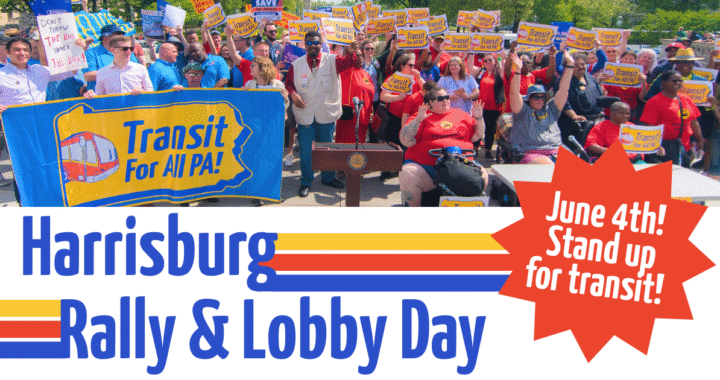
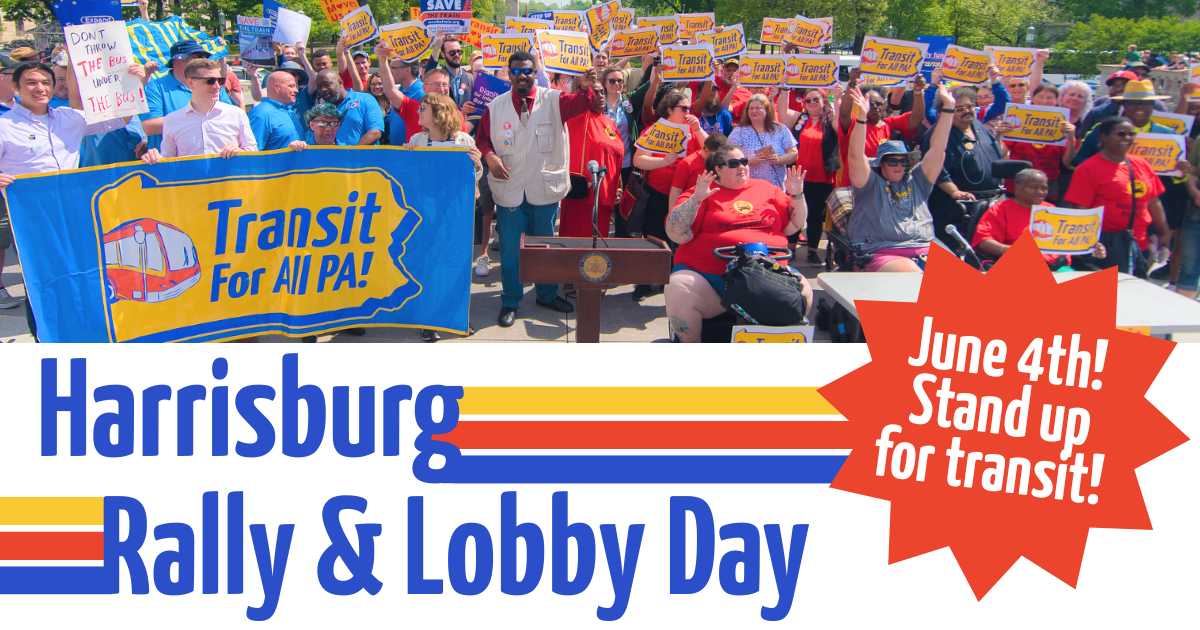
We Want Transit for All PA! 🚌❤️✊ Rally & Lobby Day

image description: graphic has a photo of Transit for All PA! advocates at a rally holding signs. Text reads “Harrisburg Rally & Lobby Day June 4th! Stand up for transit!

Transit for All PA! Rally and Lobby Day in Harrisburg!

Whether we live in big cities or small towns, public transit is a lifeline–it connects us to jobs, healthcare, community, and so much more. Public transit in Pennsylvania is under dire threat, but we can take action together to save and expand it.

Join Transit for All PA! for a day of rallying and meeting with state legislators to share our stories and tell them: Pennsylvania deserves transit that moves all of us!

  • before 10am: Travel to Harrisburg
  • 10am-11am: Rally & Press Conference
  • Noon-1pm: Drop-in Lunch Hour
  • 11am-3pm: Legislative Visits

Transportation

Transit for All PA! will be providing transportation from some communities to and from Harrisburg for this event.

Transportation from Pittsburgh

Buses to and from Harrisburg will be provided to attendees from Pittsburgh. Please meet at 4836 Ellsworth at 5:00 AM; the bus will depart at 5:30 AM. Stay tuned after registration for more details on how to reserve a spot on the bus.

Transportation from Philadelphia

Transit for All PA! will provide train tickets for attendees from the Philadelphia area. We will be taking the Keystone Line from the William H. Gray 30th Street. The train departs at 7:25 AM, so be sure to be there with plenty of time to board. Please stay tuned after registration for more details on how to reserve a ticket.

Transportation from Lancaster

Transit for All PA! will provide train tickets for attendees from the Lancaster area. The Keystone Line will arrive at the Lancaster Amtrak station at 8:42 AM, so be sure to be there with plenty of time to board. Please stay tuned after registration for more details on how to reserve a ticket.

Transportation from other communities

Transit for All PA! may also provide transportation from other communities in PA. We will determine which communities to charter buses to and from based on interest and funding, so please indicate if you would like transportation assistance when you fill out the form. Please stay tuned after registration for more details on how to reserve a spot.

Food

Everyone who RSVPs will receive a free lunch. Please let us know when you register if you have any dietary restrictions that must be accommodated. Reach out to info@transitforallpa.org if you have any restrictions that are not listed.

Accessibility

Please let us know when you register if you have any additional access needs (I.e., mobility devices, interpretation, etc) that must be accommodated, either during the rally or during transportation to and from Harrisburg. If you have accessibility needs that are not listed on the form, please reach out to info@transitforallpa.org.

Join Our Board! Nominations Are Open for PPT’s 2025 Board Elections

Image Description: PPT Member Lorita Gillespie speaks at a rally to stop the cuts to the 61s and 71s.

Join the leadership team to coordinate the strategic direction of Pittsburghers for Public Transit. Nominations open until July 6th. Voting open from July 9th to August 13th.

Pittsburghers for Public Transit is a grassroots union of transit riders, transit workers and neighbors. We fight for a public transit system that is expanded, reliable, accessible and affordable to all in Allegheny County, with no community left out. We operate as a member-led organization, which means its our members who elect our Board of Directors, develop and approve our annual strategic plan, and participate in our different committees to win our campaigns.

Our Board Election Season is a special time for PPT! We are looking for a new round of leaders who understand the importance of our work for transit justice in Allegheny County, and are looking to get more involved in directing the course of our campaigns, communications, and actions. Nominations are open until July 6th. If you think you know what it takes to lead our Union, nominate yourself or someone else! The nomination of transit riders, transit workers, Youth, Black people, Indigenous people, People of Color, LGBTQ People, People with Disabilities, Immigrants, and Women are strongly encouraged.

Nominate yourself or someone who inspires you with their leadership, vision, and commitment to transit justice.

More about nominations and voting:
6 seats are open for PPT’s General Membership to run for.
1 seat is open for a PPT Member who is a unionized transit worker.

See the list of current Board Members here.

This year, the board decided to open at least 4 seats for General PPT Members to serve on the board. These people will be elected to the seats currently filled by Bobbie Fan, Dean Mougianis, Gabriel McMorland, Mayor Nickole Nesby, Paul O’Hanlon, and Teaira Collins.

Our bylaws require that each year’s election reserves a seat for a union transit worker. This person will be elected to the seat that is currently being filled by Kevin Joa.

Nominations for these seats are open until Jul 6th. All current PPT Members are welcome to nominate themselves or another PPT Member. Outgoing board members are able to self-nominate or be nominated by another to serve another term.

PPT members are all those who support the Transit Bill of Rights, have participated in a PPT action or meeting, and have given dues of at least $2.75 cents within the last year (the cost of a single PRT fare).

PPT staff will confirm with each nominee whether they accept the nomination to be on the ballot. Each nominee will also be invited to submit up to 250 words about their background, experience, and vision for the organization. This can be submitted through the nomination form, email, or via phone and PPT staff will transcribe.

All nominee bios will be sent to PPT Members the second week of June and again the first week of July. Bios and photos will also be included in the ballot. Nominees will have 3 minutes to speak at the July PPT member meeting before votes are cast to highlight their vision for PPT and how their skills will help build the organization.

Voting in the 2025 Board of Directors election will open at PPT’s monthly meeting on July 10th, and remain open until the Summer Picnic on August 13th. PPT members cast their vote via an online form that will be shared at the July meeting and emailed, or by calling PPT’s Director.

PPT Board Structure and Expectations

Each July, PPT members vote for leaders to fill seats on PPT’s 5-15 member Board of Directors. Board Members serve a 2-year term. 2 seats must be filled by members of the Amalgamated Transit Union, Local 85 (the union that represents all of the Port Authority’s bus operators and maintenance workers) or another transportation union that represents workers in Allegheny County because strong community/labor solidarity is a central belief of the organization. The other seats are filled by members who have had previous experience with PPT’s work, and are looking to bring their involvement to the next level.

Members of the Board are expected to attend quarterly Board meetings and should also stay engaged with General Membership Meetings on the second Wednesday of each month. Additionally, Coordinating Committee members will need to maintain active lines of communication with PPT staff and other PPT members to advise and assist with the organization’s strategy, tactics, structure, and financial sustainability. Board Members should also serve on one of PPT’s three committees (Organizing Committee, Communications Committee, and Research Committee).

An excerpt of Article IV of PPT’s bylaws with full detail of the expectations and powers of PPT’s board is included at the bottom of this blog.

2025 PPT Board of Directors Election Schedule

  • Nominations are open until July 6th.
  • Bios and photos of current nominees will be sent to members before the June PPT meeting and again before the July PPT meeting. Bios will also be included on the ballot.
  • July 9th, 7pm: PPT Monthly Meeting with Board Nominee introductions and Elections, voting opens
  • August 13th, 11:59pm: Final deadline for PPT members to submit their ballots online or via phone

Submit nominations through the link below, or by calling PPT’s Director, Laura Wiens, at 703-424-0854:

Excerpt from Article IV of PPT’s Bylaws explaining expectations and operations of our Board:

Article IV – Board of Directors 

Section 1: Board Role, Size and Composition

The PPT Board of Directors shall hereinafter be referred to as the Board.

The Board is responsible for managing the business affairs, property, and policies of PPT. The Board shall be composed of five (5) to fifteen (15) members representing diverse interests and areas of expertise that strengthen the knowledge base of PPT. A minimum of two (2) seats will be reserved for members of the Amalgamated Transit Union or any union representing mass transportation workers in the Greater Pittsburgh Region. One of these reserved transportation union seats shall be elected in every second year. The Board shall have charge of the proper, normal, and usual expenditures and other business of the corporation; they shall enforce the provision of these bylaws; they shall abide by the policies and procedures set forth in the Policies and Procedures Manual, and shall enforce the rules and regulations set forth for the management, care, and governance of the property and affairs of the corporation. The Board may employ or appoint such person or persons, or agents, as they deem necessary to further the business of the corporation and shall set and adjust the compensation of all persons or agents so employed or appointed. 

The Board will hire an Executive Director who may hire such paid staff as they deem proper and necessary for the operation of the Corporation. The powers and duties of the Executive Director shall be assigned or delegated by the Board of Directors. The powers and duties of the paid staff, other than the Executive Director, shall be as assigned or as delegated by the Executive Director and/or the Board of Directors, in accordance with PPT personnel policies.  

Section 2. Qualifications for Board of Directors

Board members shall be elected from the eligible voting, dues-paying membership, and only dues-paying members are eligible to run in the elections. Candidates for the board must have been a dues-paying member for six (6) months prior to an election. 

Section 3. Compensation

The Board of PPT shall serve without compensation. Board members may be reimbursed for pre-approved expenses reasonably incurred on behalf of PPT. Nothing in this paragraph is intended to preclude a Board member from receiving compensation for their service to PPT in some other capacity, provided that the transaction has been reviewed and approved by the Finance Committee in compliance with PPT’s conflict of interest policy.

Section 4. Recruitment and Elections

Nominations for new Board members will be made and publicized by the Board, Membership, and/or staff, at least two (2) months before the Membership meeting at which the election will take place.  Elections for the Board shall take place every year, with five (5) seats elected in even years, and six (6) seats elected in odd years.

Elections shall be announced verbally at the two (2) immediately preceding membership meetings before the election.

Dues paying members in good standing are eligible to vote. 

Bios and platforms of candidates shall be distributed by email to members one month in advance of the vote, and publicized on PPT’s website. Candidates will have three (3) minutes to address the general membership in advance of the election during the general membership meeting. Voting will be open for a minimum of one (1) week.

Section 5. Powers

The government of PPT, the direction of its work, and the control of its property shall be vested in the Board. The Board shall be authorized to adopt such rules and regulations as may be deemed advisable for the government of the Board, the proper conduct of business of PPT, and the guidance of all committees, officers, and employees. The Board shall be empowered to do whatever in its judgement may be calculated to increase efficiency and add to the usefulness of PPT; and to carry out the main purpose of this association provided such action is not in conflict with these bylaws. 

Section 6. Limitations

PPT shall be non-partisan and non-sectarian in its activities. 

Section 7. Term of office and Maximum number of terms  

Directors shall be elected to a term of two (2) years. Board members shall serve a maximum of three (3) consecutive terms. 

Section 8. Meeting Attendance Requirement

Board members must attend a minimum of three (3) out of the four (4) quarterly board meetings per year by phone or presence. Failure to fulfill minimum board obligations may be accepted by the board as a de facto or implicit resignation. The Board member will be informed before the publication of such de facto resignation to the members.

Save Our Service! Rally to Win the Transit Funding We Need

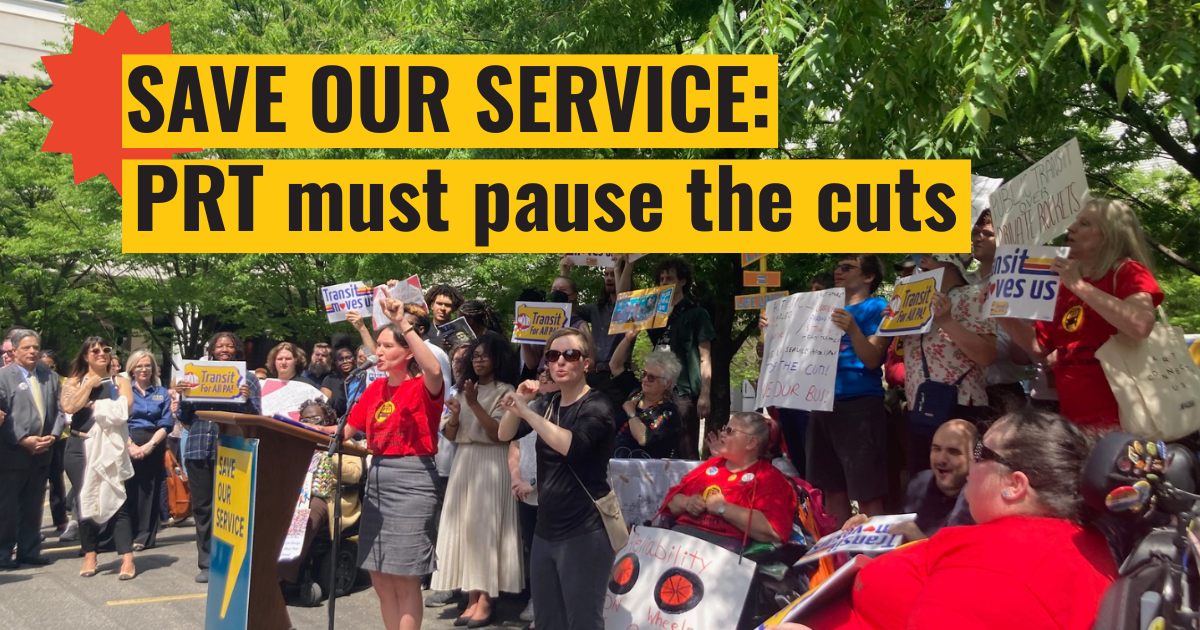
image description: graphic has group of transit activists holding “Transit for All PA!” signs with fists up and text atht says “Save our Service! Rally for transit funding to serve our communities April 29 1:30-2:30 955 Penn Ave, 15222”

SOS! Stop the cuts! Stop the fare hikes! It’s time to SAVE OUR SERVICE and win transit funding to move us all!!

Devastating cuts of up to 35% of our bus and T service and 62% of ACCESS services have been proposed to take effect in Allegheny County if the Pennsylvania state legislature fails to pass new funding for transit for next year. The impact of these cuts would be staggering- for riders, for our economy and businesses, for our region’s road congestion and air quality. Bus lines are lifelines, and our lifelines are on life support.

Riders, transit workers and Allegheny County elected officials are standing together to say, “NOT ON OUR WATCH!”

On the first day of Pittsburgh Regional Transit’s first public hearing on the funding crisis, Transit for All PA!, Pittsburghers for Public Transit and Mobilify Southwestern Pennsylvania are cohosting a rally and press conference outside the David L. Lawrence Convention Center.

Join transit riders and workers, County Executive Sara Innamorato, Pittsburgh Regional Transit CEO Katherine Kelleman, the Pittsburgh Downtown Partnership and the Allegheny County Pennsylvania state delegation to show that we are united in the fight for state funding, for the transit service we deserve!

Riders can learn more about the proposed cuts and PRT’s Public Comment Period here

Read this recap from PPT Member Edith Abeyta:

On April 29, Denise, Grace, and I attended the Pittsburghers for Public Transit’s Save Our Service Rally at the corner of Penn Avenue and 10th located near the entrance to the convention center. It started at 1:30pm. We arrived a little bit early with our signs we made specifically for the rally. The City of Pittsburgh was setting up a platform, podium, and sound system for the speakers. A PRT bus and driver were parked in front of the rally location.

Soon the corner filled up and the parking lot where the rally was taking place was full with people of all ages, backgrounds, ethnicities, races, and abilities with their own signs and t-shirts supporting public transportation and opposing the cuts from the state. Plenty of news cameras and reporters were there to record the speakers and interview people in attendance.

Elected representatives from the local to state level were in attendance to support the people and public transportation lending their voices and power to prevent the severe cuts to public transportation that is being proposed by the state. I saw Mayor Ed Gainey and his challenger, Cory O’Connor, Pittsburgh Councilwoman Barb Warwick, County Ex. Sara Innamaroto, and Rep. Moseley. 

PPT ED, Laura kicked off the rally laying out the issues and followed up later with the solutions. She was followed by speakers from a variety of sectors including elected government representatives and private industry development.

Like all PPT events the people who are most impacted were the majority and made their concerns and demands heard. It was a great example of coalition building and solidarity across various levels of power and positions.

How Will Pittsburgh’s Mayor & City Council Candidates Improve Transit Access?

Image description: Graphic has a bus outline with the text #VoteTransit Candidate Responses” with color photos of candidates who responded to our candidate survey and black & white photos for those who did not respond.

Read what the Candidates running to be PGH’s next Mayor & City Council Representatives have to say about public transit. Take our #VoteTransit Pledge to commit to electing Transit Champion!

With Election Day around the corner on May 20th, city residents will have the chance to choose who should be Pittsburgh’s next Mayor & City Council representatives. We at Pittsburghers for Public Transit know that there is a lot that City and municipal leaders can do to improve access to public transit – from improving sidewalks, to building bus shelters, to creating land use and employee policy that support transit access – even though the Mayor & City Council don’t have direct control over the transit agency itself.

This year, we put together our #VoteTransit 25/25/25 Goal for candidates running to lead our city–and we want them to commit!

Pittsburghers for Public Transit’s Transit 25/25/25 Goals:

Mayoral and City Council candidates must pledge to:

  • Close 25% of the City’s Sidewalk Network Gaps 
  • Install 25 New Bus Shelters Per Year
  • Ensure 25% of the New Housing Units Built Near Our Best Transit Assets are Deeply Affordable 

Pittsburghers for Public Transit held a Mayoral Forum on April 9th (which was attended by all candidates except Corey O’Connor).

We also issued a short two-question #VoteTransit Candidate Questionnaire to every candidate running in the races for Pittsburgh Mayor and City Council. In the Mayoral race, responses were submitted by Democrats Mayor Ed Gainey and Cory O’Connor, and Republican Thomas West. In the Pittsburgh City Council races, responses were submitted by Councilperson Erika Strassburger, who’s running to continue representing District 8.

Read on to learn what each candidate said about our goal to build more bus shelters, better sidewalks, and more deeply affordable housing near great transit. And join more than 2,000 people who’ve taken the #VoteTransit pledge to vote for *Transit Champions* on Election Day! How can you get ready for Election day? Check your polling place here! and pledge to #VoteTransit below!

#VoteTransit Questionnaire Responses from Democratic candidates for Mayor of Pittsburgh:

1. Do you agree with the #VoteTransit 25/25/25 Goals? If not, what targets would you set as Mayor in this coming term around sidewalk network gap closure, new bus shelter deployment, and the development of more units of affordable housing by the busways, T and our frequent service corridors?

Mayor Ed Gainey

I agree with these goals. From the beginning of my administration, I have stood with transit riders, bike/ped advocates, and everyone in our community who has a vision of how to make equitable mobility a reality in our city. These goals are a powerful next step that have been created by people directly impacted by these issues and I look forward to working with you to implement them.

Corey O’Connor

Yes, I agree with the goals above. Closing sidewalk gaps, adding additional bus shelters, and building more deeply affordable housing near transit would all work together to make our city a safer, more accessible, and more pleasant place to live.

2. For the targets that you are proposing, what are your specific plans to fund and implement the sidewalk network gap closure, install the new bus shelters per year, and ensure housing by transit is affordable? What are the obstacles that you see in meeting your goals, and how would you overcome them?

Mayor Ed Gainey

Sidewalks: When it comes to sidewalks in our city, we have an archaic system that places responsibility for sidewalk maintenance with the property owner. This means that property owners in wealthier communities are better able to keep their sidewalks in good repair than people in lower-income communities. My administration has begun to
address this issue with a pilot program that uses city resources to replace large sections of sidewalk – which is more cost effective than having a single property owner replace their own sidewalk – then bills that back to the property owner at cost, and on a payment plan as needed. Not only is it less expensive for the property owner, it allows
large sections of sidewalk gap to be repaired at once and increases equitable access to ccessible sidewalks.

Because of this system, as well as the City’s funding constraints over the next two years, closing 25% of the sidewalk network gap will require creativity, persistence, and partnership. Cities like Denver, with its sidewalk fee, are coming up with innovative ways to repair sidewalks and fill gaps. I’d like to work with Pittsburghers for Public Transit, the Department of Mobility and Infrastructure, and City Council to consider solutions to come up with the revenue necessary to close this gap over the next four years.

Bus shelters: One way to potentially identify the revenue necessary to create 25 new shelters per year would be for the city to take over shelters from Gateway and start bringing in that ad revenue ourselves – then using that to install more shelters.

Affordable Housing: We can only achieve the goal of 25% of new units near our best transit assets being deeply affordable if we create deep partnerships between the Urban Redevelopment Authority, the Housing Authority, and our other affordable housing partners. My administration has modeled how this is possible by creating and
preserving 2,000 units of affordable housing in our first term and beginning a process to reshape the Housing Authority. My administration also has bills currently before the Planning Commission and City Council both for transit-oriented development as well as Inclusionary Zoning, which would require that 10% of all housing built in our high-density zones, including transit corridors, be affordable. It’s proving to be a battle because many of our market-rate developers and their allies on City Council simply don’t want to participate in that – no matter how many tax breaks and density incentives we offer to let them build more and make more money. We’ll continue to move toward this goal using all our resources; from organizing ordinary Pittsburghers in every neighborhood to continuing to demonstrate the effectiveness of our affordable housing development. In a second term, I hope to partner with PPT to select a set of transit stations or neighborhoods with best-in-class transit to create flagship projects that demonstrate to the city what a transit-oriented future will look like.

Corey O’Connor

Meeting these ambitious goals will require a combination of local investment, state grants, and innovative funding mechanisms, as obtaining federal funds under the current administration will be challenging. For sidewalk gap closures, I’d prioritize city capital funds and public-private partnerships, focusing on high-traffic areas. A major obstacle will be private property owners’ reluctance to take on legal responsibility, as the city must sign agreements with each owner before making improvements. Bus shelter installations can be streamlined by working with transit agencies and leveraging private sponsorships or advertising revenue. To ensure affordable housing near transit, I support investing in site preparation, making permitting easier, and expanding financial incentives to accelerate construction. The key obstacles are funding constraints and bureaucratic delays, which I’d address through more efficient permitting processes and targeted investment strategies.

#VoteTransit Questionnaire Responses from Democratic candidates for Pittsburgh City Council:

1. Do you agree with the #VoteTransit 25/25/25 Goals? If not, what targets would you set as Mayor in this coming term around sidewalk network gap closure, new bus shelter deployment, and the development of more units of affordable housing by the busways, T and our frequent service corridors?

Erika Strassburger, PGH City Council District 8

I support PPT’s 25/25/25 goals. We need bold goals such as these to help Pittsburghers shift from a car-centric culture to one that prioritizes public transportation and last-mile modes such as biking, walking, and rolling. In some communities, the barriers are physical – dangerous sidewalks or no sidewalks, uncomfortable and unwelcoming bus shelters or bus stops with no shelter. In other communities, the barriers are more psychological – the amenities might exist, but the buses are perceived to be or are too unreliable or too infrequent to encourage easy use. Denser housing around transit corridors and stations would help drive the usage of those lines, and more affordable housing in these areas would go a long way to ensuring that all residents can live in neighborhoods with excellent amenities and that they can travel to work, school, or other neighborhoods with ease.

Kim Salinetro, Candidate for PGH City Council District 2

[Kim Salinetro did not respond to PPT’s #VoteTransit Candidate Questionnaire]

Anthony Coghill, PGH City Council District 4

[Anthony Coghill did not respond to PPT’s #VoteTransit Candidate Questionnaire]

2. For the targets that you are proposing, what are your specific plans to fund and implement the sidewalk network gap closure, install the new bus shelters per year, and ensure housing by transit is affordable? What are the obstacles that you see in meeting your goals, and how would you overcome them?

Erika Strassburger, City Council District 8

Funding is the largest barrier to reaching all three of these goals. First, any deal with our major five non-profits to receive non-taxable income should include a line item for sidewalks and bus shelters. Workers, students, and visitors to all five of our largest eds and meds institutions rely on public transportation, so their dollars would be going directly toward improving the accessibility of the people using their services. Second, the City could set up a special trust fund for sidewalks and bus shelters. The trust fund could be funded through several methods – advertising on city amenities, increased permit fees for various activities or events, or even a special voter referendum-approved tax. The trust fund would help ensure a constant stream of funding that remained separate from the general fund. This would allow the city to continue the work it has initiated to build and repair sidewalks on whole city blocks around City-owned property that is currently vacant or abandoned and not yet churning through our Land Bank.

Funding for the affordable housing near transit corridors is also an obstacle, but in a different way. As transit-oriented development zoning overlays are proposed and rolled out, affordability should be a requirement. That said, given the soaring cost of the development of housing units, housing is not likely to be built (with affordability) without some way to close the financing gaps. Whether the Housing Opportunity Fund can shift to create a line item for these transit-oriented development areas, or whether tax abatements such as LERTAs or TIFs might be the answer, there needs to be some way to provide a carrot along with the stick. Additionally, for deeply affordable units (30% AMI and below), there must be a partnership with the Allegheny County Department of Human Services to ensure the appropriate wrap-around services are available and are funded.

Kim Salinetro, Candidate for City Council District 2

[Kim Salinetro did not respond to PPT’s #VoteTransit Candidate Questionnaire]

Anthony Coghill, City Council District 4

[Anthony Coghill did not respond to PPT’s #VoteTransit Candidate Questionnaire]

Pittsburghers for Public Transit’s #VoteTransit Questionnaire, as answered by Republican candidates for Mayor of Pittsburgh

1. Do you agree with the #VoteTransit 25/25/25 Goals? If not, what targets would you set as Mayor in this coming term around sidewalk network gap closure, new bus shelter deployment, and the development of more units of affordable housing by the busways, T and our frequent service corridors?

Thomas West

I agree with the intent behind these goals — making Pittsburgh safer, more connected, and more affordable for working families — but I also believe in setting realistic, fiscally responsible targets that reflect our city’s current budget constraints and economic challenges.

  • Sidewalk Network Gaps: Sidewalks are not just about safety — they’re a fundamental part of our city’s infrastructure and directly impact quality of life. I support the goal of closing 25% of network gaps, but more importantly, I believe we must prioritize neighborhoods with the highest need first — particularly those with schools, senior populations, and high pedestrian traffic. These communities can’t afford to be left behind.
  • Bus Shelters: With PRT facing financial instability and possible service cuts, our first priority must be preserving access to reliable, functional transit. Once that stability is addressed, I would support a goal of installing up to 25 new shelters annually, but only if we can ensure each one is placed where it’s actually needed — not just to hit a number.
  • Affordable Housing Near Transit: I do not support mandates that dictate where or what type of housing must be built. I believe in incentivizing development and creating conditions where affordable housing can thrive organically — not through one-size-fits-all policies. We need to focus on neighborhood revitalization
    that drives private investment, job creation, and ultimately, homeownership — not just rental units stacked by transit stops.

Tony Moreno

[Tony Moreno did not respond to PPT’s #VoteTransit Candidate Questionnaire]

2. For the targets that you are proposing, what are your specific plans to fund and implement the sidewalk network gap closure, install the new bus shelters per year, and ensure housing by transit is affordable? What are the obstacles that you see in meeting your goals, and how would you overcome them?

Thomas West

  • Sidewalks: The City of Pittsburgh has mismanaged millions in taxpayer dollars over the years — it’s time to get back to the basics. As Mayor, I will audit current infrastructure spending and identify waste to reallocate funds to critical priorities like sidewalks. I will also pursue public-private partnerships and state/federal infrastructure grants — but every dollar must be accountable. No more throwing money at problems without a plan or a result.
  • Bus Shelters & Transit Support: With PRT facing a fiscal cliff, I will be a vocal advocate in Harrisburg and Washington. Philadelphia has a seat at the table — Pittsburgh needs one too. But while we fight for funding, we must also ensure that current transit dollars are used efficiently. Every shelter should be placed based on data — ridership, need, and accessibility — not political pressure. We must stop chasing headlines and start chasing results.
  • Affordable Housing: We don’t need more top-down mandates. What we need is economic opportunity in every corner of the city. That starts with cutting red tape for small businesses, investing in workforce development, and supporting local entrepreneurs. When you bring jobs into underserved neighborhoods, you create demand for housing — and that’s when developers step in. My goal is to create environments where affordable housing is a market-driven result of growth, not a politically dictated outcome.

Tony Moreno

[Tony Moreno did not respond to PPT’s #VoteTransit Candidate Questionnaire]

May 20 is Election Day! Make sure you’re registered to vote and take the #VoteTransit pledge to elect Transit Champions on Election Day!

#VoteTransit 25/25/25 Goal for Mayoral & City Council Candidates

Pittsburghers for Public Transit (PPT) Calls on Pittsburgh Mayoral and City Council Candidates to Adopt PPT’s 25/25/25 Goals and Develop a Plan for Implementation 

Pittsburghers for Public Transit’s Transit 25/25/25 Goals call on Mayoral and City Council candidates to:

  1. Close 25% of the City’s Sidewalk Network Gaps 
  2. Install 25 New Bus Shelters Per Year
  3. Ensure 25% of the New Housing Units Built Near Our Best Transit Assets are Deeply Affordable 

The Transit 25/25/25 Goals around sidewalks, bus shelters, and affordable, higher-density housing by our best transit assets are continuations of the equitable infrastructure campaign work that members of Pittsburghers for Public Transit have been leading for the last several years. 

Pittsburgh’s lack of connected, accessible and maintained sidewalks often creates access and safety barriers to transit for disabled riders and families. Improving the conditions of our sidewalks was named as one of the top priorities for residents during the transition planning process for Mayor Gainey’s administration in 2021.

Pittsburgh is also nationally notable for how few bus shelters are installed at bus stops, which forces riders to be exposed to the elements and make them less visible and less safe while waiting for the bus. The responsibility for bus shelters falls exclusively on the City of Pittsburgh within its jurisdiction, not on Pittsburgh Regional Transit, and there is a backlog of over 230 stops within the City that have ridership high enough to justify a shelter that are currently unprotected.

Finally, the Pittsburgh affordable housing crisis has displaced thousands of residents far from the City into County municipalities with low access to jobs, critical amenities, and transit. This affordable housing crisis has particularly affected Black and brown families and transit riders; it is imperative that our City has a holistic policy and funding solution to ensure that more low-income riders can live by the transportation assets that they rely on.

Pittsburghers for Public Transit has long elevated the role of Pittsburgh’s Mayor and City Council leaders in improving – or impeding – access to quality transit. 

In 2021 PPT published the Pittsburgh 100 Day Transit Platform in collaboration with dozens of residents and organizations that have strong insights into what is needed to ensure Pittsburgh’s transportation network is effective, safe, and accessible to all. This platform laid out four broad mobility goals for the City, and several specific policy demands to achieve a more effective, equitable mobility network that works for all residents. 

In 2022, we followed up with our Representing our Routes report, which laid out the quality and reliability of transit service, the demographics of ridership, and the number of bus shelters in each City Council district. In this report, we also detailed the direct and advocacy roles that Pittsburgh City Council members can and must play in improving transit service and infrastructure.

Finally, in 2024 we organized and won the first City budget line item for transit amenities, ensuring that there were resources to begin to close the gaps on the 230+ bus stops that have ridership that is high enough to warrant a shelter, but in which no shelter has been installed. It is long overdue for the City to put attention and resources towards this need, and there must be a process to continue and grow this work.

What power do the City of Pittsburgh’s elected leaders have to improve public transit access?

The Mayor & City Council can improve transit access through their power to shape;

  • Policies around Land Use, Zoning, and Affordable Housing Development
  • Infrastructure Projects like sidewalks, bus shelters, and bus lanes
  • City Department staffing and employee policy
  • City Budgets

World-class cities like Pittsburgh should strive for excellence, provide better opportunities for citizens, and afford residents the freedom to improve their lives. Affordable, accessible, quality public transit is central to achieving these goals.

Although many believe that transit is exclusively within the purview of the Pittsburgh Regional Transit, and is governed solely by our county and state legislators, the power of local governments to bring big improvements for transit riders should not be underestimated. Elevating public transit requires that Pittsburgh elected officials invest in sidewalks, bus shelters, and safe street infrastructure like crosswalks and curb cuts, and that we plan for development that supports more affordable housing and critical amenities by quality transit.

Mass transit provides freedom of movement to those with the least amount of access. Recent Census numbers tell us that 23% of Pittsburgh households do not have access to a private vehicle. They also show that 50,000 Pittsburghers – more than 17% of our City’s population – use public transit to commute to work every day. Add students, the unemployed, and other noncommuters, and the actual number of transit riders is much higher. 

The City of Pittsburgh Council and the Mayor’s office are responsible for many of the critical land use policies, infrastructure investments, and staffing decisions that can make public transit safe and effective. This is done in part through the City’s zoning and planning laws, which set the rules for how our City is developed. For instance, zoning rules define whether low-income residents can find affordable housing by great transit assets like the East Busway and the T, and high-frequency routes like the 16, 51, 61s, 86, 87, 71s, 91, and more.

The City is also responsible for the built environment and sidewalk infrastructure that allows all transit riders, regardless of self-mobility concerns, to safely and comfortably get to and from bus stops. From bus shelters to street lighting, ADA-compliant sidewalks, curb cuts, and crosswalks, the ability to access transit is almost entirely dependent on decisions made by our City. Decisions to paint bus-only lanes and to install traffic signals that turn green for buses ensure that transit is reliable and timely, and ensure that we are prioritizing 40-passenger vehicles over single cars on our roads.

The Mayor and City Council also propose and approve operating budgets and appoints Department heads to manage City staff time that can ensure the prioritization and implementation of these types of transit infrastructure improvements.

You can join Pittsburghers for Public Transit (PPT) call on Pittsburgh Mayoral and City Council Candidates to adopt PPT’s 25/25/25 Goals by pledging to #VoteTransit on May 20, 2025:

#VoteTransit Mayoral Candidate Forum on April 9th

image description: Flyer for #VoteTransit Mayoral Candidate Forum, 4/9, 7-8:30p, 4836 Ellsworth Ave as photos of each of the 4 candidates & the PPT logo

Pittsburghers for Public Transit’s #VoteTransit Mayoral Candidate Forum and “Transit 25/25/25 Goal” for all candidates running to be our municipal leaders.

Español Abajo

There is a lot that the city can do to improve access to public transit – from sidewalks, to bus stops, to housing policy – and this year, 4 candidates are running to be our next Mayor. Join transit advocates from across the city to learn these candidates’ plans for transit if they are elected to office. Pittsburghers for Public Transit has issued the Transit 25/25/25 Goal for candidates in this year’s city race. Now it’s time to learn whether candidates adopt it and seriously consider their role in improving our transit access.

Join PPT’s #VoteTransit Pittsburgh Mayoral Candidate Forum
April 9, 7-8:30pm
4836 Ellsworth Ave., Pittsburgh, PA 15213


Pittsburghers for Public Transit (PPT) Calls on Pittsburgh Mayoral and City Council Candidates to Adopt PPT’s 25/25/25 Goals and Develop a Plan for Implementation 

Pittsburghers for Public Transit’s Transit 25/25/25 Goals:

Mayoral and City Council candidates must pledge to:

  • Close 25% of the City’s Sidewalk Network Gaps 
  • Install 25 New Bus Shelters Per Year
  • Ensure 25% of the New Housing Units Built Near Our Best Transit Assets are Deeply Affordable 

The Transit 25/25/25 Goals around sidewalks, bus shelters, and affordable, higher-density housing by our best transit assets are continuations of the equitable infrastructure campaign work that members of Pittsburghers for Public Transit have been leading for the last several years. 

Pittsburgh’s lack of connected, accessible and maintained sidewalks often creates access and safety barriers to transit for disabled riders and families. Improving the conditions of our sidewalks was named as one of the top priorities for residents during the transition planning process for Mayor Gainey’s administration in 2021.

Pittsburgh is also nationally notable for how few bus shelters are installed at bus stops, which forces riders to be exposed to the elements and make them less visible and less safe while waiting for the bus. The responsibility for bus shelters falls exclusively on the City of Pittsburgh within its jurisdiction, not on Pittsburgh Regional Transit, and there is a backlog of over 230 stops within the City that have ridership high enough to justify a shelter that are currently unprotected.

Finally, the Pittsburgh affordable housing crisis has displaced thousands of residents far from the City into County municipalities with low access to jobs, critical amenities, and transit. This affordable housing crisis has particularly affected Black and brown families and transit riders; it is imperative that our City has a holistic policy and funding solution to ensure that more low-income riders can live by the transportation assets that they rely on.


La ciudad puede hacer mucho para mejorar el acceso al transporte público, desde aceras y paradas de autobús hasta políticas de vivienda. Este año, cuatro candidatos se postulan para ser nuestro próximo alcalde. Únase a los defensores del transporte público de toda la ciudad para conocer los planes de estos candidatos si son elegidos.

Todos están invitados a unirse a PPT para este Foro de la Alcaldía, que organizamos durante nuestra Asamblea General Mensual. Aprovechamos nuestras reuniones mensuales para informar sobre las campañas actuales, debatir estrategias y tácticas, capacitar en nuevas habilidades y construir comunidad. La reunión de este mes será híbrida. Únase a nosotros en persona en 4836 Ellsworth Ave o en línea a través de Zoom.

6pm-7pm Hora para socializar // 7pm-8:3pm Foro de candidates.